What Is a Content Distribution Platform a Practical Guide
A content distribution platform is software that automates publishing content across multiple channels from a central hub. Its primary benefit is that it goes beyond a basic single-channel scheduler by helping teams adapt and move content across a fragmented social environment where the typical user visits 6.84 platforms per month.
If you’re managing a podcast, webinar, YouTube episode, or customer interview, this is usually where the workflow breaks. Making the long-form asset isn’t the hardest part. The hard part is cutting it into usable clips, adding captions that won’t get covered by platform UI, formatting each version correctly, and getting everything queued without turning one recording into a week of manual labor.
That operational gap is why the category matters. A lot of teams think they need “a scheduler,” then realize a scheduler only solves the last 10% of the problem. The expensive part is transformation. Distribution starts earlier than publish time.
Table of Contents
- What Is a Content Distribution Platform
- Core Features of a Modern Distribution Platform
- How These Platforms Actually Work An Operational View
- Business Use Cases and Measuring ROI
- How to Choose the Right Content Distribution Platform
- Frequently Asked Questions
- What’s the difference between content distribution and content promotion?
- Can a content distribution platform handle blogs and written content?
- How many channels should you publish to?
- Do content distribution platforms help with SEO?
- Is a content distribution platform the same as a social media scheduler?
What Is a Content Distribution Platform
A content distribution platform is a system that lets you manage, publish, and monitor content across multiple channels from one place. In practice, that means social posts, clips, emails, blogs, and campaign assets move through a shared workflow instead of living in disconnected tools and spreadsheets.
A basic scheduler posts finished assets to one or more networks. A distribution platform should do more than that. It should help you prepare the asset for each channel, organize approvals, and give you one operating view of what shipped and what performed.
That distinction matters because audience behavior is messy now. By 2025, the typical social media user is projected to visit 6.84 different platforms monthly, which makes single-channel planning weak by default, and 90% of content marketers depend on social media as a distribution channel according to Sprinklr’s social media marketing statistics. If your workflow assumes one post goes everywhere unchanged, you’re building around convenience instead of reach.
Practical rule: If a tool only helps you click “publish,” it’s not solving the expensive part of distribution.
For written content teams, this same logic applies outside video. If you’re deciding where long-form posts should live beyond your site, guides like these best Medium alternatives for writers are useful because channel choice affects distribution mechanics, not just visibility.
If you need a broader definition of the discipline itself, quso has a plain-language explainer on content distribution.
Core Features of a Modern Distribution Platform
What separates a platform from a scheduler
Teams often don’t need more buttons. They need fewer handoffs.
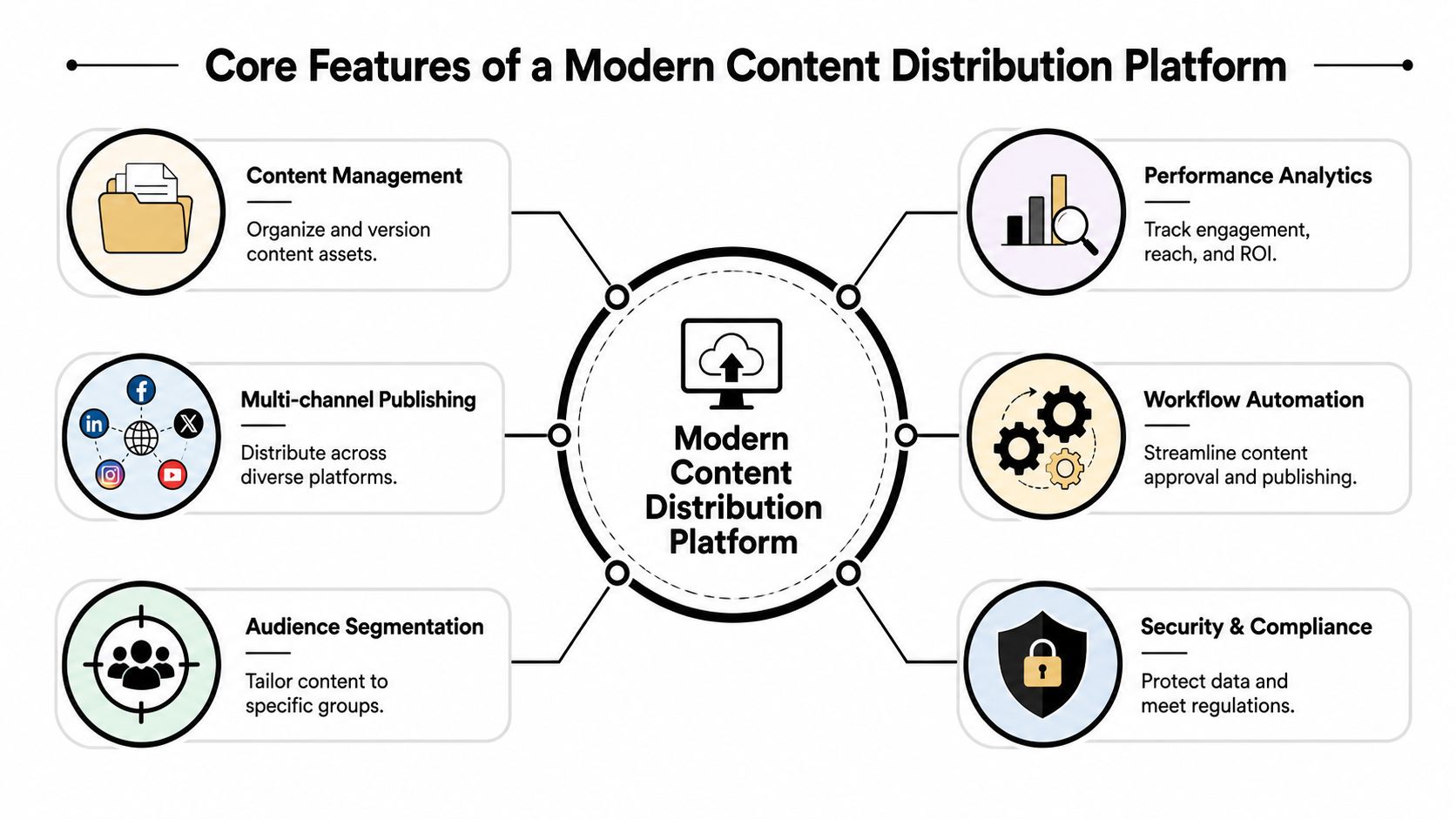
A modern distribution platform should cover the full operating chain: ingest the source asset, transform it for each destination, route it through approval, publish it on schedule, and report performance in a way that helps you decide what to make next. If one of those layers is missing, the team ends up patching the process with folders, docs, and manual edits.
This is also why channel analysis matters. Platform mix changes by audience and business model. If you’re mapping priorities for the next planning cycle, this 2026 social media platform analysis is a useful supplement because it looks at where different channels fit instead of treating every network the same.
The six features that matter
Here’s the practical checklist I use when evaluating whether a tool is a distribution platform:
| Feature | What it needs to do | Why it matters |
|---|---|---|
| Content management | Store source files, versions, and approved derivatives | Teams lose time when assets live in chat threads and random drives |
| Multi-channel publishing | Push to the channels that actually matter to your workflow | Publishing only helps if the destinations match your plan |
| Audience segmentation | Let you tailor copy, hooks, and packaging by audience | The same asset often needs different framing for different buyers |
| Performance analytics | Show cross-channel results in one place | You need one reporting layer, not five tabs and a spreadsheet |
| Workflow automation | Handle reviews, queues, and recurring distribution tasks | Approval delay is one of the biggest hidden bottlenecks |
| Security and compliance | Protect access and prevent off-brand publishing | Small teams need control just as much as large ones |
A platform earns the name when it reduces operational complexity, not when it adds another calendar.
For teams focused on reuse, quso’s guide to content repurposing tools is a good companion resource because repurposing is usually the missing layer in social workflows.
How These Platforms Actually Work An Operational View
The workflow from long video to live posts
This is the part most articles skip.
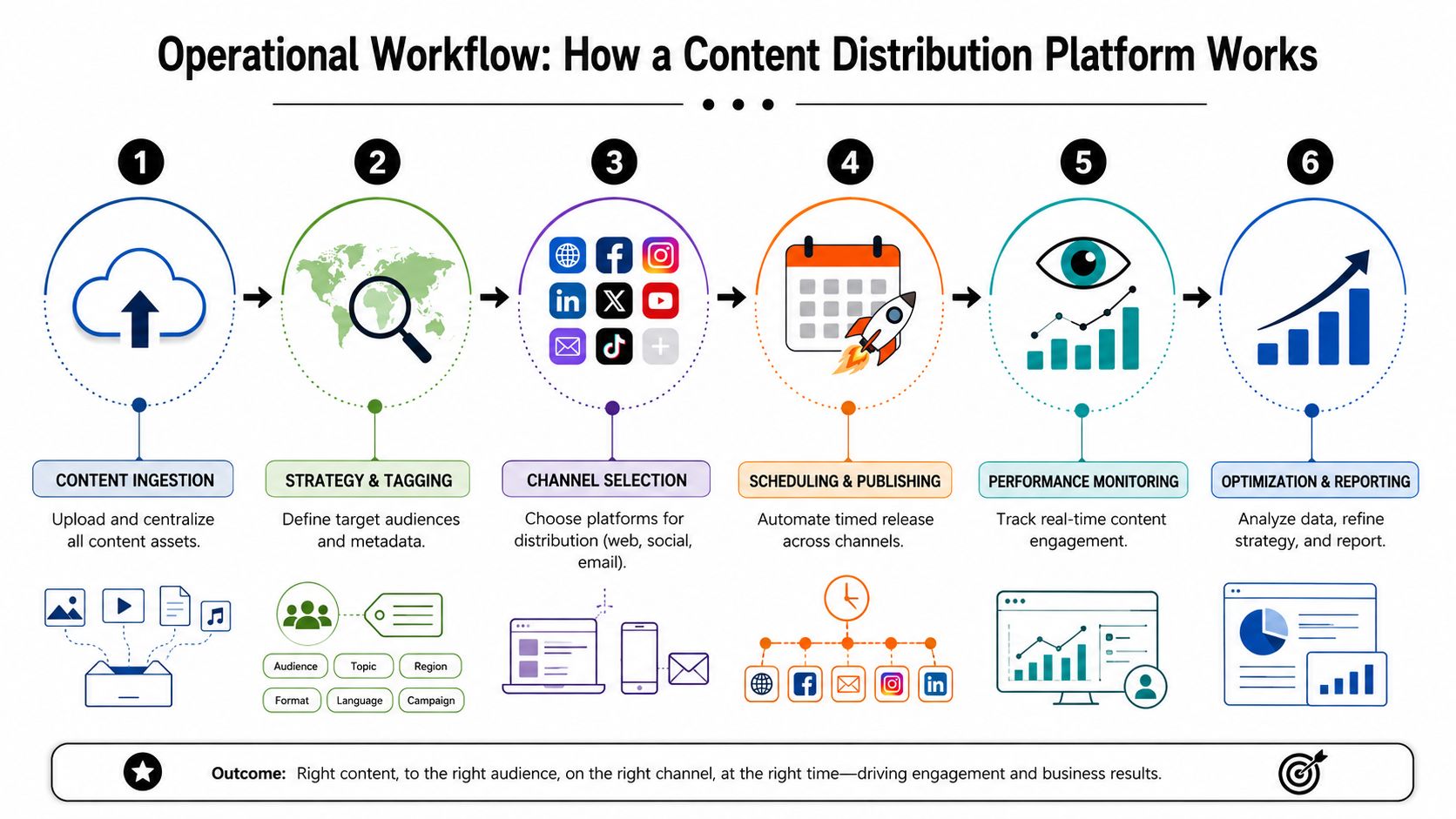
A real workflow usually starts with one anchor asset: a webinar recording, sales demo, customer interview, podcast, training session, or YouTube video. The platform ingests that source file or connects to the source library. Then the operator tags the topic, audience, campaign, and destination channels so the asset can move through a usable system instead of becoming one more orphaned upload.
Next comes transformation. The platform should then identify clip-worthy moments, generate short segments, add captions, and resize for the destination format. Safe zones matter here. Captions that look centered in a generic preview can get covered by platform UI, profile chips, or CTA overlays once the post is live. Good operators check this before scheduling because bad caption placement makes otherwise solid clips unusable.
According to WG Content’s content distribution strategy article, 70% of content marketers cite repurposing as their biggest bottleneck. That matches what teams run into operationally. The problem usually isn’t ideas. It’s the handwork between the long asset and the final queue.
Where operators lose time
The weak point is usually the review stage.
AI can suggest clips, but somebody still needs to decide whether the opening hook is strong enough, whether the excerpt makes sense without the original context, and whether the subtitle styling is readable on mobile. The right system shortens this review step. It doesn’t pretend review isn’t needed.
A practical workflow looks like this:
- Ingest the source. Upload the recording or connect the channel.
- Tag for context. Add campaign, persona, product, and topic labels.
- Generate derivatives. Create clips, captions, and platform-fit versions.
- Review the edits. Fix hook strength, caption timing, and framing.
- Queue by channel. Assign publish dates, copy variants, and owners.
- Monitor and learn. Feed performance back into the next round of edits.
Most distribution failure happens before publish. The post goes out late because the clip never became usable.
Platforms built around long-video repurposing are more useful than simple schedulers. They reduce the transformation work that usually eats the week.
Business Use Cases and Measuring ROI

A distribution platform is worth buying when it helps you produce more business outcomes from one source asset, not when it merely makes posting feel tidier.
The strongest case comes from video. 89% of businesses used video as a marketing tool in 2024, and short-form video leads ROI. Separately, content marketing generates 3x more leads than outbound marketing at 62% lower cost, which is why clip distribution matters so much when video is already the highest-performing format in the mix, based on Salesgenie’s content marketing statistics.
B2B teams
A webinar doesn’t need to be a one-day event. It can become a month of distribution if the team turns it into channel-specific clips, follow-up email snippets, and sales enablement posts.
The KPI stack should stay close to pipeline:
- Lead quality: Are demo requests or form fills improving?
- Sales enablement use: Is the sales team reusing clips in outreach?
- Conversion path: Which clip themes drive visits to high-intent pages?
Vanity metrics still matter as diagnostics, but they shouldn’t be the success definition.
Creators and educators
Long YouTube episodes, livestreams, and podcast interviews already contain the raw material for shorts, reels, and quote-led clips. The challenge is consistency. Most creators can record the main show. Fewer can cut and package derivatives every week without the process falling apart.
Operator view: The anchor asset is the strategy. The short clips are the distribution layer.
One source file can support multiple surfaces without creating a separate production process for each one.
Here’s a useful walkthrough on how distribution supports content performance over time:
Small teams
A small business usually doesn’t need a giant content operation. It needs a reliable publishing system that keeps messaging consistent across channels and avoids stalled campaigns.
The ROI questions are simpler than people make them:
- Did this reduce production time?
- Did it increase output from existing assets?
- Did it improve lead or revenue-adjacent metrics?
If you need a planning layer before measurement, quso’s guide to social media planner software is useful for structuring cadence and ownership.
How to Choose the Right Content Distribution Platform

Questions worth asking before you buy
Don’t start with feature lists. Start with your source asset and your bottleneck.
If your team starts with long video, the first question is whether the platform is designed for transformation or just publishing. A lot of products look strong in demos because the asset is already edited. That’s not your real workflow.
Use this shortlist when evaluating options:
- What source content does it handle? Long video, podcast audio, webinars, and interviews matter more than isolated social posts if repurposing is your real job.
- How strong is the transformation layer? Look for clipping, captioning, resizing, and a clean review step. If it only trims, you’ll still do the hard work elsewhere.
- Which channels are native? Your key destinations should be supported directly. Workarounds create failure points.
- What does reporting show? You want apples-to-apples performance views, not disconnected platform exports.
- How is pricing structured? Some tools charge by seat, some by output volume, some by channels. The wrong model gets expensive fast.
For buyers comparing distribution categories more broadly, this Press Release Zen service comparison is a useful example of how channel-specific distribution tools differ from broader workflow platforms.
One more point. If a vendor can’t explain how captions behave in platform safe zones, how review works, and how one long asset becomes multiple ready-to-post pieces, they’re probably selling a scheduler with better branding.
Frequently Asked Questions
What’s the difference between content distribution and content promotion?
Distribution is the system for getting content to the right channels and formats. Promotion is the push behind it, such as paid amplification, creator partnerships, or community seeding. Distribution is the infrastructure. Promotion is one tactic inside it.
Can a content distribution platform handle blogs and written content?
Yes, but the mechanics differ. For blogs, the platform usually handles publishing, syndication, scheduling, and campaign coordination. For video, the bigger value is often transformation, because the source asset needs to become multiple channel-fit derivatives first.
How many channels should you publish to?
There isn’t a magic number. The right number is the one your team can support well with the right format, timing, and review process. If posting to more channels lowers quality or delays publishing, you’re overextended.
Do content distribution platforms help with SEO?
Indirectly, yes. They can increase visibility, support content reuse, drive branded traffic, and help teams consistently circulate assets that point back to owned properties. They don’t replace search strategy, but they can support it.
Is a content distribution platform the same as a social media scheduler?
No. A scheduler handles posting. A distribution platform should also organize assets, adapt content for channels, manage approvals, and help you measure outcomes across the whole workflow.
If your bottleneck is turning long videos into usable short clips without spending days on editing and manual scheduling, quso.ai is built for that workflow. It helps creators and marketing teams repurpose long-form video, add captions, and queue content for distribution without stitching the process together across multiple tools.