10 Social Media Workflow Tools for Content Teams

The best social media workflow tools don’t publish posts. They coordinate the work before publishing, including content production, caption review, approvals, scheduling, inbox management, and reporting. That distinction matters because a scheduler can tell you when a post goes live, but it won’t necessarily help you turn a podcast into clips, route drafts to a client, or keep a compliance review from blocking the calendar.
This list compares 10 social media workflow tools by the bottleneck each one solves. The evaluation covers long-form video repurposing, auto-captions, scheduling, approvals, collaboration, analytics, inbox operations, and overall complexity. It also considers how many handoffs a team creates between recording, editing, reviewing, scheduling, and reporting.
For SEO publication, the exact URL slug and H1 should be social-media-workflow-tools. Before publishing, verify that quso.ai doesn’t already have a near-duplicate article on this topic, then add the relevant internal links and retain the FAQ at the end. The comparison table will follow the tool reviews, along with a recommended workflow for creators, social media managers, agencies, and B2B or SaaS teams.
Table of Contents
- 1. quso.ai
- 2. Sprout Social
- 3. Hootsuite
- 4. Buffer
- 5. Later
- 6. Loomly
- 7. Agorapulse
- 8. Planable
- 9. CoSchedule Marketing Calendar
- 10. ContentStudio
- Top 10 Social Media Workflow Tools Comparison
- Build the Workflow Before You Buy
1. quso.ai
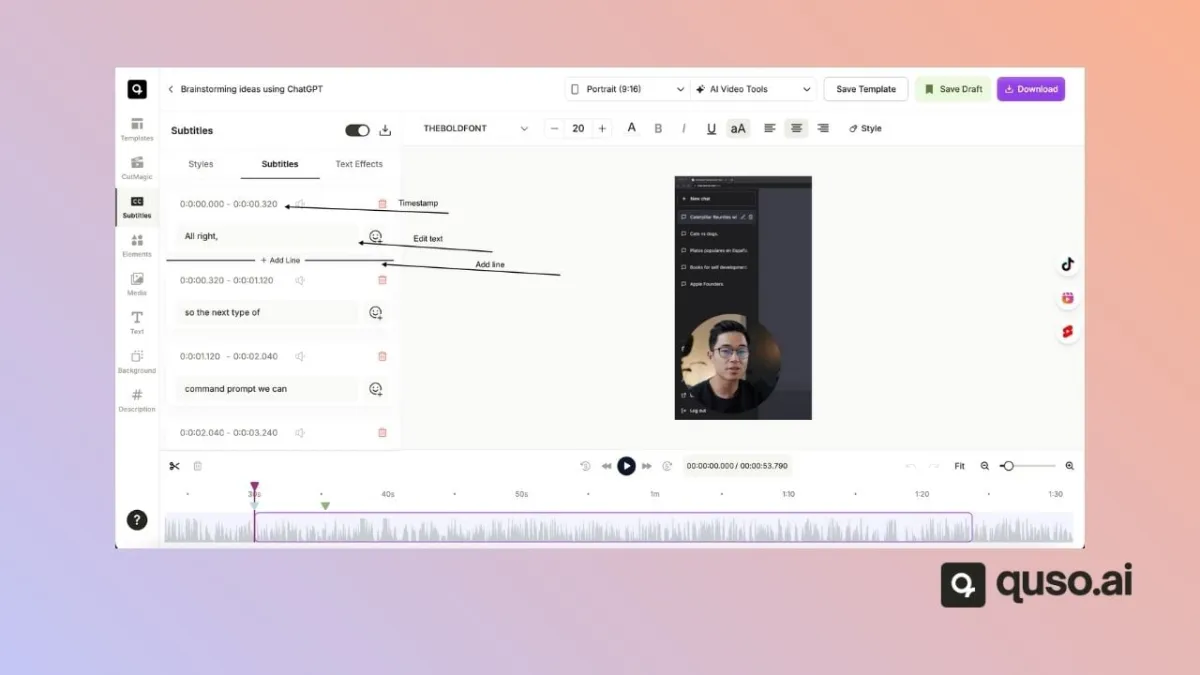
quso.ai is the strongest fit when the bottleneck starts with a long recording rather than a finished social post. It turns a podcast, webinar, interview, or YouTube video into short-form clips, adds animated captions, removes filler words, resizes content for different platforms, and places the finished posts into a publishing calendar.
The workflow is designed to reduce the handoffs that usually slow repurposing down. You can import recordings from YouTube, Vimeo, X, Facebook, Twitch, Loom, Zoom, Google Drive, Dropbox, or local files. Its automated clip detection scores candidate moments for Virality, based on analysis of 170K+ posts across 1,100+ creators, giving a team a way to prioritize promising sections before reviewing them manually.
Practical rule: Let AI find the candidates, but keep a human responsible for context, tone, claims, and sensitive edits.
Best for video-to-publishing workflows
quso.ai’s main advantage is the connected path from source video to scheduled content. Word-level animated captions support 100+ languages, and the platform can batch clips into a calendar instead of forcing a creator to export each asset, open another captioning tool, and then move everything into a scheduler.
That makes it useful for coaches, podcasters, YouTubers, consultants, and B2B marketers who want to turn one recording into a week of short-form content. The free plan provides 75 credits per month, approximately 75 minutes of video, and 720p exports with a quso.ai watermark, with TikTok publishing available and no credit card required. Paid plans start at $29 per month with 1080p exports without a watermark, and scheduling to 7 platforms starts on the Essential plan at $39 per month.
The trade-off is important. Automated clipping still needs review, especially when a selected moment depends on context, a speaker uses an ambiguous phrase, or a brand requires precise messaging. The free export limitations may also make the plan better for testing than for final client delivery.
Pros
- End-to-end production: Clip detection, animated captions, filler-word removal, resizing, and scheduling live in one workflow.
- Prioritized review: Virality scoring helps teams decide which candidate moments deserve attention first.
- Broad source support: Recordings can come from common video, meeting, storage, and social platforms.
- Accessible testing: The free tier lets creators generate and review clips before committing to a paid plan.
Cons
- Human review remains necessary: AI selection isn’t a substitute for editorial judgment.
- Free exports are limited: The watermark and 720p output may not suit professional publishing.
Read the full quso.ai platform details before building a workflow around your source formats, caption needs, and publishing destinations.
2. Sprout Social
Sprout Social is designed for the bottleneck that appears after content is ready: coordinating publication, engagement, approvals, analytics, listening, and reporting in one controlled workflow. It suits brands and agencies that need clear ownership and an audit trail, rather than creators who only need a publishing queue.
The unified calendar supports roles and approval steps. Smart Inbox gives community managers one place to handle conversations across networks, while analytics and report building help teams explain results to executives or clients. Listening and Advocacy are add-on areas, so teams can extend the platform as their social operation becomes more mature.
Best for governance and reporting
Sprout Social is most useful when several people handle the same post. A creator submits the asset, a social manager revises the caption, a brand lead approves it, and a community manager takes ownership of replies after publication. This workflow reduces handoff confusion, although it does not replace a dedicated video repurposing tool for selecting clips, reframing footage, or generating captions.
AI-assisted inbox summaries and message spike alerts can help teams find conversations that need attention. Teams evaluating AI tools for social media management should still check how summaries fit their escalation rules and review process.
The trade-off is cost and complexity. Sprout Social is one of the pricier choices in this category, and add-on modules can increase the total commitment. Non-specialist stakeholders may also need onboarding before they are comfortable with the interface.
For a closer look at its workflow trade-offs, read this Sprout Social review. Choose it for auditability, executive-ready reporting, and controlled collaboration. A solo creator focused on turning video into clips and scheduling them will likely find it excessive.
3. Hootsuite
Hootsuite is built for breadth. It covers multi-network scheduling, content calendars, approvals, integrations, team inbox functions, and reporting, making it a practical choice for teams managing several brands or channels from one interface.
The main bottleneck it solves is fragmentation across a broad social stack. Role-based permissions help separate drafting from approval and publishing. Its app directory can connect social operations with customer service, tracking, and other marketing systems. That ecosystem matters when social is part of a larger marketing or support workflow.
Best for integrations and multi-brand operations
Hootsuite’s familiar calendar model can shorten onboarding for practitioners who have used the platform before. It also gives agencies a single operational view across client accounts, which is useful when the team needs to check what’s drafted, approved, scheduled, or already published.
The drawback is weight. Solo creators may find the interface heavier than necessary, and per-seat pricing can become harder to justify as more people need access. It’s also not a dedicated long-form video repurposing tool, so a podcast or webinar team will usually need another step for clip selection, reframing, and captions.
The Hootsuite social media management review is useful if you’re comparing it with a more specialized production workflow. Choose Hootsuite when integration coverage and account coordination matter more than keeping the creation stack compact.

4. Buffer
Buffer is the cleanest option for teams that want scheduling without a large operating system. Its queue-based calendar is easy to understand, and it supports publishing across major networks with a relatively approachable workflow.
The bottleneck here is consistency. A creator or consultant can prepare posts in batches, assign them to channel queues, and maintain a predictable publishing rhythm without configuring complex approval trees or listening modules. Buffer also includes first-comment and hashtag management, a link-in-bio Start Page, and channel analytics.
Best for lightweight scheduling
Buffer is a good fit when the content is already produced. It won’t replace a video repurposing workflow, and its inbox, listening, approvals, and reporting are lighter than the larger suites. That’s a limitation for teams running customer care or formal client review, but it’s an advantage for small teams that don’t want unused features.
Higher tiers add more advanced approval capabilities, while the basic experience stays approachable for non-marketers. Predictable channel-based scaling can also make the tool easier to budget than a complex suite with several modules.
For a closer look at its use cases, read the Buffer review. Pair Buffer with a dedicated video workflow when your main challenge is creating the assets. Choose it alone when your main challenge is getting finished posts onto the calendar.
5. Later
Later is designed around visual planning. Its drag-and-drop calendar and media library make it particularly useful for Instagram, TikTok, Pinterest, LinkedIn, Threads, and Facebook workflows where the appearance and sequence of assets matter.
Later solves the campaign-planning bottleneck for visual brands, creators, and small agencies. Teams can organize media across profiles, preview the planned grid, and coordinate posts without rebuilding the calendar in a separate project-management tool. Its inbox supports Instagram and Facebook messages, and link-in-bio and hashtag tools support visual campaigns.
Best for visual calendars and multi-profile planning
The interface is its strongest selling point. A social manager can see whether a launch sequence feels coherent before scheduling it, while an agency can plan multiple client profiles from a central visual workspace. That’s more useful than a generic calendar when the relationship between adjacent posts affects the campaign.
Later is less suitable for deep listening, advanced reporting, or complex enterprise governance. Some collaboration features are also reserved for higher tiers. It doesn’t solve the first production step either. If the raw material is a long interview, you’ll still need a tool that identifies clips, adds captions, and exports platform-ready versions before Later becomes useful.
6. Loomly
Loomly focuses on editorial control without requiring a full enterprise suite. It combines a content calendar with post ideas, versioning, asset management, UTM templates, approvals, publishing, and analytics.
Its core bottleneck is post quality and governance. A team can develop an idea, create platform-specific versions, store the relevant assets, and route the draft through approval before scheduling. That structure helps SMB and mid-market teams avoid the common failure where a caption is approved in a chat thread but the final asset changes afterward.
Best for structured drafting and approvals
Loomly’s idea prompts reduce blank-page friction, while versioning gives reviewers a clearer record of revisions. That’s useful for B2B and SaaS teams where the social post may need input from product marketing, brand, legal, or an executive stakeholder.
The platform’s analytics are solid but not as deep as enterprise-focused suites. Pricing can also rise with user count and feature requirements. Loomly won’t replace a long-video clipper or a specialized captioning workflow, so video-heavy teams should decide whether its governance benefits justify adding another handoff.
Use Loomly when approvals and brand consistency are the main problems. If your team already has approved assets and only needs a straightforward queue, Buffer may be easier to operate.

7. Agorapulse
Agorapulse balances publishing, inbox management, reporting, and collaboration. It’s aimed at agencies and in-house teams that need clear assignments, client-friendly reporting, and a practical way to manage conversations after posts go live.
The unified social inbox supports labels, assignments, and saved replies. Publishing queues can be organized by category, which helps teams separate educational content, product updates, campaigns, and community posts. Approval workflows keep the calendar from becoming a collection of unverified drafts.
Best for inbox operations and client reporting
Agorapulse is strongest when the workflow continues after publication. A post isn’t finished when it goes live. Someone still needs to review comments, route questions, identify service issues, and record what the audience is asking. The inbox and assignment model gives those tasks an owner instead of leaving them scattered across native apps.
Reporting and competitor tracking add value for agencies that need to distribute results to clients. UTM management also helps connect social activity with broader marketing measurement. The trade-off is that per-user pricing can become expensive as teams grow, while advanced analytics and listening require higher-tier plans.
The platform offers a 30-day free trial, according to the product plan notes. That makes it practical to test with a real inbox and approval process rather than judging only from a demo.

8. Planable
Planable is built around a specific pain point: getting social content approved. It provides pixel-accurate previews, comments directly on posts, multi-step approvals, workspaces, and feed or calendar views for different stakeholders.
The tool is especially effective for agencies and teams where clients or executives need to review social content without learning a complicated marketing platform. Reviewers can comment on the post itself, rather than searching through email for the correct attachment or replying to a chat message that contains an older version.
Best for client sign-off
Planable’s workspace model can be cost-effective for agencies because paid plans support unlimited users, according to the product plan notes. That changes the collaboration calculation when many clients or stakeholders need access but only a few people actively manage the calendar.
The limitation is scope. Planable is lighter on analytics and listening than full social suites, so teams may need another tool for deep reporting, social care, or performance analysis. It also doesn’t solve video creation. A repurposing tool must produce the captioned clips first, then Planable can handle review and approval.

Approval insight: The fastest review process is the one where stakeholders see the final platform format, not a description of what the post will become.
9. CoSchedule Marketing Calendar
CoSchedule treats social as part of the wider marketing calendar. It brings social posts, campaigns, tasks, approvals, and content operations into a shared planning environment.
That makes it a strong option when a launch involves more than social. A B2B team can place a blog article, email campaign, webinar, sales enablement task, and social distribution plan beside each other. Drag-and-drop rescheduling helps the team adjust the campaign when a launch date changes.
Best for campaign-level coordination
CoSchedule’s reusable queues and templates help teams standardize recurring promotional work. The task and approval structure also gives managers visibility into what is blocked and who owns the next step.
The compromise is that CoSchedule is calendar-first rather than inbox-first. Social listening and community care features are limited, so a team with high conversation volume may need a separate platform. Pricing and user or profile limits can also require close review before purchase.
Choose CoSchedule when social posts need to sit beside email, blog, and launch work. Don’t choose it solely because you need to turn a long video into short clips. It coordinates the campaign after the assets exist, but it isn’t a dedicated repurposing engine.

10. ContentStudio
ContentStudio combines social publishing with content discovery and curation. Its discovery feeds help teams find ideas by topic, while workspaces, approval flows, media libraries, client reporting, and AI-assisted caption generation support the execution side.
The main bottleneck it solves is idea supply. Teams often have a calendar and a scheduler but still lose time deciding what to publish next. ContentStudio can help marketers find relevant themes, collect inspiration, and turn those ideas into planned posts.
Best for discovery-led workflows
Agency teams may also benefit from account-based pricing when their client roster changes. Client workspaces and reporting keep separate brands organized, while approval flows prevent discovered content from moving directly to publication without review.
The trade-off is complexity. Pricing and add-on logic can require careful plan comparison, and listening or care functions are lighter than enterprise platforms. AI-generated captions also need validation for accuracy, brand voice, and claims before scheduling.
ContentStudio is a better fit for content-led agencies and brands that need research built into planning. It’s less useful as the only tool for a podcast team whose primary challenge is extracting, captioning, and distributing clips from long recordings.
Top 10 Social Media Workflow Tools Comparison
| Product | Best for | Key features | Why choose it | Pricing snapshot |
|---|---|---|---|---|
| quso.ai (Recommended) | Solo creators, podcasters, social teams, B2B content teams | Auto-clip detection + Virality scoring (based on analysis of 170K+ posts across 1,100+ creators); word-level animated captions (100+ languages); filler-word removal; built-in scheduler | End-to-end repurposing: upload long video/podcast → captioned, resized short clips → scheduled posts (batch workflow), upload to get free clips to review | Free plan (75 credits/mo, 720p with watermark); paid from $29/mo for 1080p, more credits |
| Sprout Social | Brands & agencies with governance needs | Publishing calendar, approval roles, Smart Inbox, advanced analytics | Robust team workflows and executive reporting for agencies/enterprises | Higher-priced; add-ons increase total cost |
| Hootsuite | Multi-brand teams familiar with legacy tools | Multi-network scheduling, role permissions, integrations, team inbox | Mature ecosystem and broad integrations; familiar calendar model | Per-seat pricing can add up |
| Buffer | Small teams, creators, consultants | Queue/calendar scheduling, hashtag/first-comment manager, analytics | Very easy onboarding; predictable scaling by channels | Predictable pricing tiers; simpler feature set |
| Later | Visual-first brands, Instagram/TikTok creators | Visual planner, drag-and-drop calendar, media library, auto-publish | Best UX for visual planning and grid aesthetics | Tiered plans; advanced collaboration on higher tiers |
| Loomly | SMBs & mid-market teams focused on approvals | Idea prompts, post versioning, asset library, approvals | Strong governance and post-ideation tools without enterprise bloat | Pricing increases with users/features |
| Agorapulse | Agencies and in-house teams needing social care | Unified inbox, labeling/assignments, scheduling, reporting | Well-regarded inbox & collaboration; client-ready reporting | 30-day free trial; per-user pricing at scale |
| Planable | Agencies and client-facing teams needing fast approvals | Pixel-accurate previews, multi-step approvals, commenting on posts | Outstanding for client/executive sign-off; workspace-based pricing | Pricing by workspace (cost-effective for agencies) |
| CoSchedule Marketing Calendar | Teams needing campaign-level coordination | Real-time calendar, reusable queues, tasking & approvals | Unifies social with email/blog/campaign ops for visibility | Calendar-first pricing; enterprise limits may apply |
| ContentStudio | Agencies needing content discovery + publishing | Publishing calendar, discovery/curation modules, AI captioning | Helpful discovery to overcome blank-page syndrome; flexible account pricing | Account-based pricing; add-on complexity possible |
Build the Workflow Before You Buy
The right choice depends on where work stops moving. quso.ai is the best fit for turning long video into captioned short-form content and scheduling it. Buffer suits lightweight scheduling, Later suits visual planning, and Planable or Loomly suit approvals and governance. Sprout Social and Agorapulse are stronger for inbox operations, reporting, and team workflows. Hootsuite is the broad integration choice, CoSchedule is better for campaign calendars, and ContentStudio fits discovery-led planning.
A practical workflow starts with the recording, not the calendar. Map the actual handoff:
- Recording intake: Where does the podcast, webinar, interview, or product demo enter the system?
- Clip selection: Who decides which moments become short-form posts?
- Caption review: Who checks transcription accuracy, claims, tone, and brand language?
- Format review: Are captions, hooks, speaker framing, and call-to-action text visible on every platform?
- Approval: Who signs off, and what happens when the reviewer requests a revision?
- Scheduling: Who assigns dates, channels, and campaign context?
- Community management: Who answers comments, routes questions, and escalates sensitive issues?
- Reporting: Which results influence the next batch of clips?
This map usually reveals whether you need one platform or a stack. A solo creator may need production plus scheduling and nothing more. An agency may need specialized video repurposing, Planable for client approval, and Agorapulse for inbox and reporting. A SaaS marketing team may prefer a video workflow connected to Loomly or CoSchedule so social supports launches rather than operating separately.
Treat AI output as a draft, not an authority. Validate captions against the source recording, remove misleading excerpts, check names and product terms, and define an approval rule for regulated or reputation-sensitive posts. This is especially important because AI adoption in social work has expanded while accuracy, prompt skill, and governance remain practical implementation concerns, as documented by Metricool’s guide to AI tools for social media.
Platform formatting deserves its own checkpoint. Captions and text must stay inside each platform’s safe zone, where interface elements won’t cover the speaker’s face, headline, subtitles, or call to action. A technically correct export can still fail in the feed if the UI overlaps the important information.
For Instagram, the caption can contain up to 2,200 characters, but the feed preview typically shows about 125 characters before the expansion, according to Instagram caption length guidance from Charwise. Put the hook and essential context first. Separate research cited by PostPlanify’s Instagram caption analysis reports that captions between 126 and 800 characters outperformed the commonly recommended 51 to 125-character range, with median engagement rates of 3.94% to 4.2% compared with 2.04%. Use that as a testing input, not a universal formula.
LinkedIn’s native scheduler handles feed posts from 10 minutes ahead to 3 months ahead and supports text, single-image, and video posts, but it doesn’t support Events, Job postings, Services listings, or Group posts, according to LinkedIn scheduling limitations from Time To Post. A third-party scheduler may help with calendar consistency, but you should still confirm what each platform connection can publish directly.
Before committing, compare tools against the workflow you run.
- Production coverage: Can it create clips, captions, formats, and final assets, or does it only schedule?
- Review controls: Can the right person approve the exact version that will publish?
- Safe-zone handling: Can your team inspect caption placement and UI overlap before publishing?
- Calendar ownership: Is it clear who owns each post and what happens when the date changes?
- Inbox responsibility: Can comments, messages, and escalations reach a named owner?
- Reporting usefulness: Does the report lead to a next action, or merely summarize activity?
- Tool count: Will the stack remove handoffs, or add another export and import step?
- Trust controls: Can people verify AI captions, clip context, brand voice, and compliance?
A scheduler won’t fix a production bottleneck. A social inbox won’t fix missing approvals. And a repurposing tool won’t replace a team’s judgment about what should represent the brand. The best stack matches the first point where work slows down and keeps the path from source asset to published post visible. That discipline can help with broader operational problems, including reducing margin leakage in delivery.
Frequently asked questions
What do social media workflow tools do?
They coordinate the steps between content creation and performance review, including drafting, editing, approvals, scheduling, publishing, inbox management, and reporting. A scheduler handles timing, while a workflow tool helps define ownership and the handoffs around that timing.
Which tool is best for repurposing video?
quso.ai is the strongest fit in this list for turning long-form recordings into short clips, adding auto-captions, resizing content, and scheduling the resulting posts. Human review is still important for context, tone, and brand-sensitive edits.
Do creators need a separate scheduler?
Not always. If your video tool includes scheduling, one integrated workflow can reduce exports and app switching. Creators who already have finished assets may prefer a lightweight scheduler such as Buffer, while teams with more complex approvals may add Planable or Loomly.
How do approval workflows work?
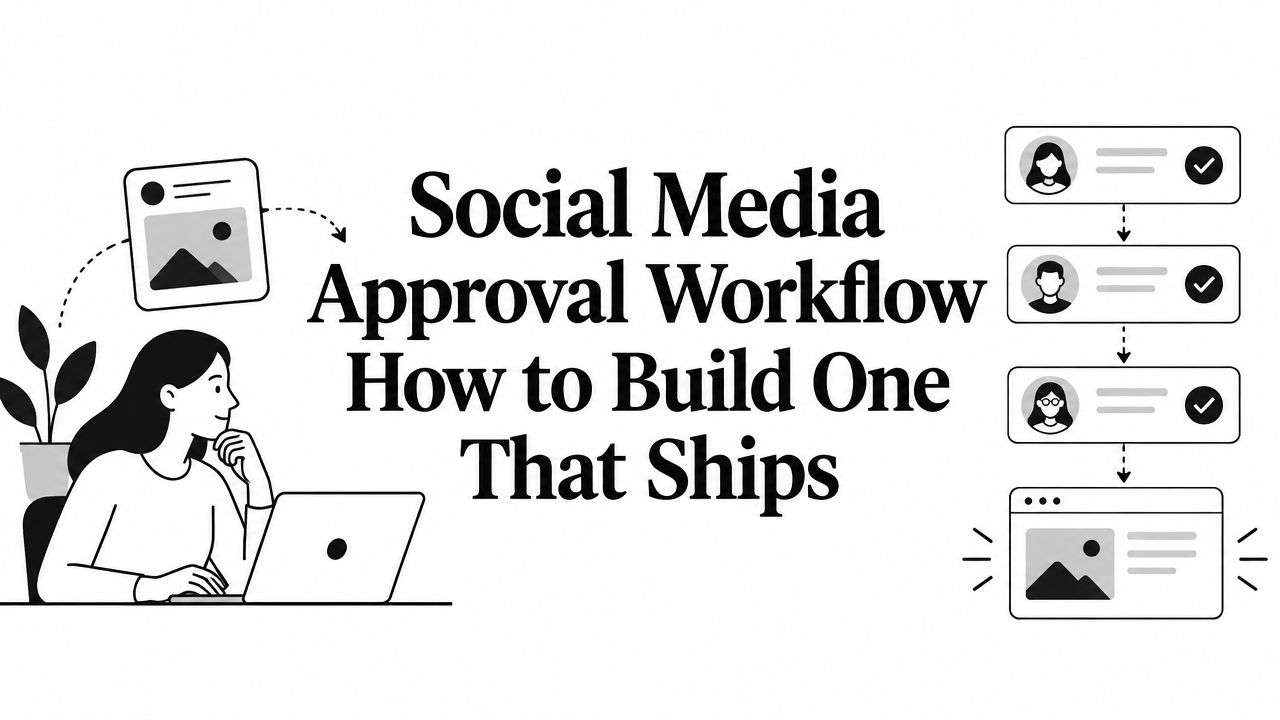
A draft moves through defined reviewers before publication. The team assigns responsibility, reviews the platform-ready asset and caption, requests changes when needed, then records final sign-off before scheduling.
How do you choose between an all-in-one platform and a specialized stack?
Choose an all-in-one platform when your main need is centralized governance, inbox management, reporting, or campaign coordination. Choose a specialized stack when one bottleneck, such as video repurposing, is slowing the entire operation and a broad suite would add complexity without solving that first problem.
quso.ai turns long videos into short-form clips, adds auto-captions, and helps teams schedule the finished content across their publishing workflow. Upload a long-form recording, review the free clips, and see whether it removes the handoffs slowing down your next content batch by visiting quso.ai.