Best Video Length for TikTok: A 2026 Data-Backed Guide
The best video length for TikTok isn’t one number. The strongest engagement window is 21 to 34 seconds, but videos over 60 seconds can drive higher reach and are required for monetization, which means the right length depends on whether you want views, retention, or revenue.
Most advice about TikTok length is too simple. “Keep it short” is only half true. Short clips can win on completion and fast engagement, but longer clips can win on total watch time, distribution, and payout eligibility. If you’re repurposing podcasts, webinars, demos, or founder content, that trade-off matters more than any generic rule.
Table of Contents
- The Best Video Length for TikTok Is Not One Number
- Why Longer Videos Can Outperform Shorter Clips
- Optimal TikTok Lengths by Primary Goal
- Matching Video Length to Your Content Type
- A Practical Workflow for Creating Perfect Clips
- Frequently Asked Questions About TikTok Video Length
The Best Video Length for TikTok Is Not One Number
If you’re searching for the best video length for TikTok, start with your goal, not a magic duration. The platform rewards different lengths for different outcomes, so the right answer changes based on what you need the video to do.
For pure engagement, 21 to 34 seconds is the most reliable range. For monetization, you need to cross 60 seconds. For deeper educational or thought-leadership content, a longer window often gives you enough room to say something useful without turning the clip into a rushed teaser.
That’s the conflict most guides skip. The same edit usually can’t maximize virality, retention depth, and monetization at once.
A simple way to consider this:
- Want likes, completion, and shareable storytelling: Aim for 21 to 34 seconds
- Want more substance without going full long-form: Test 31 to 60 seconds
- Want payout eligibility and broader reach potential: Go over 60 seconds
- Want educational clarity: Keep enough room to teach, not just hook
For another practical take on how different lengths change performance, Viral.new’s video length insights are worth reviewing alongside your own content goals.
Practical rule: Don’t ask “What length works on TikTok?” Ask “What length fits this outcome?”
Why Longer Videos Can Outperform Shorter Clips
TikTok still behaves like a short-form platform, but that doesn’t mean shorter always wins.
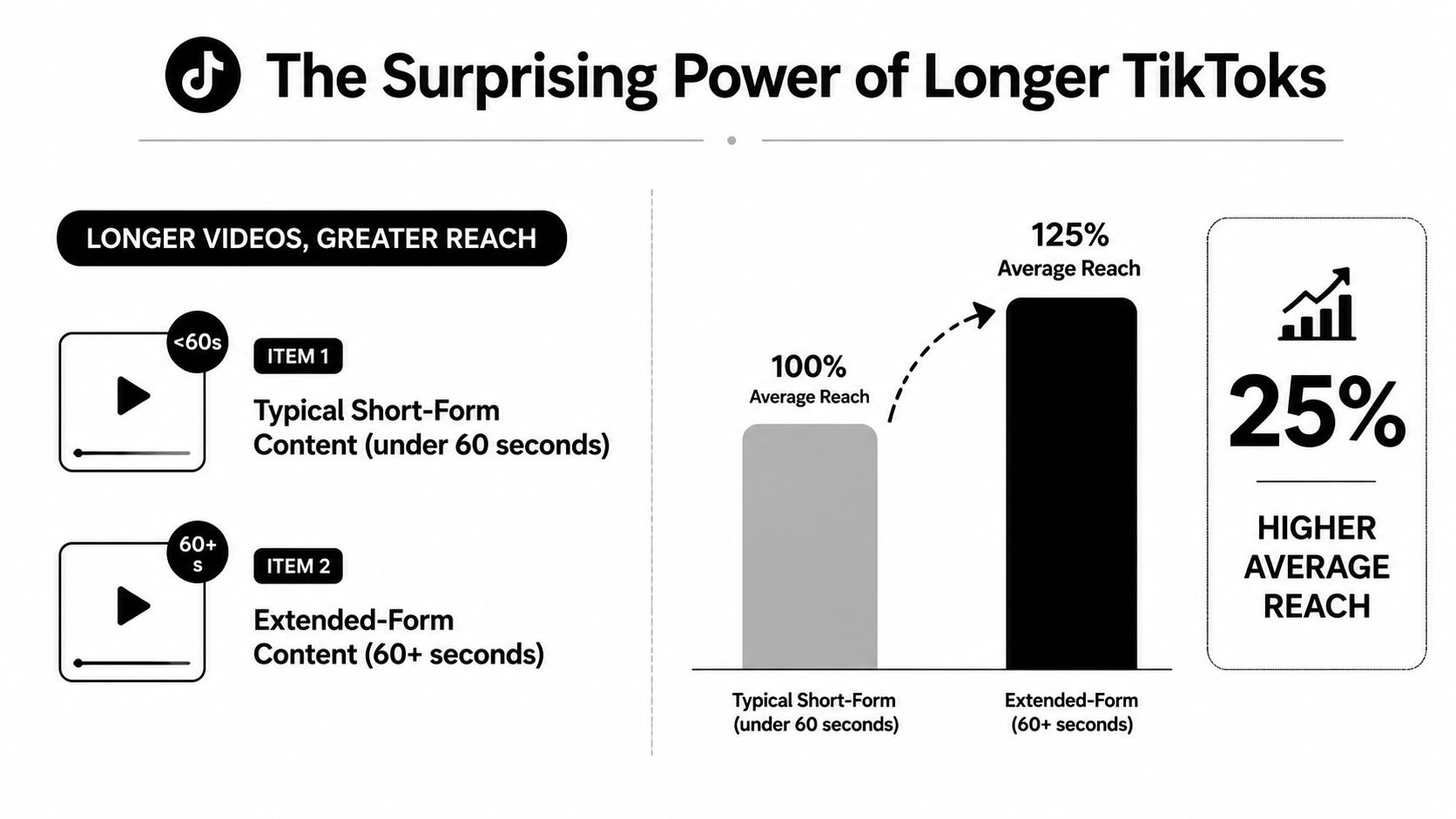
The reach gap most creators miss
According to Buffer’s TikTok length analysis, approximately 86% of TikTok videos are under one minute, yet videos over 60 seconds achieve at least 43.2% more reach and 63.8% more total watch time than shorter videos.
That’s the true opportunity. Most creators still post like TikTok is only a fast-cut meme feed, while the platform has already started rewarding stronger watch sessions.
The same analysis found that videos between one and ten minutes made up only 12% of analyzed content, yet they produced the highest median reach of 432.5 views and highest median watch time of 11.3 seconds across categories. The key jump happens when you move past the one-minute mark.
Why the algorithm can reward longer clips
A longer clip gives you more surface area to build a narrative, teach a concept, or hold attention through a payoff. If the pacing stays tight, the algorithm has more total watch time to work with. That changes the economics of the post.
This matters even more for repurposed content. A webinar answer, podcast moment, or product explanation often gets butchered when it’s squeezed into a throwaway soundbite. A better approach is to preserve the core idea and support it with readable on-screen text. If you need to tighten readability first, this guide on turning on captions on TikTok is a useful baseline.
Longer only works when every segment earns its place. Dead air, slow setup, and weak visual pacing will sink a 70-second clip faster than they’ll hurt a 20-second one.
Optimal TikTok Lengths by Primary Goal
There is no single best TikTok length because the platform rewards different outcomes at different runtimes. Short videos are easier to spread. Longer videos give you more room to qualify viewers, explain an offer, and earn revenue. If you use one length for every objective, you usually get average results across all of them.
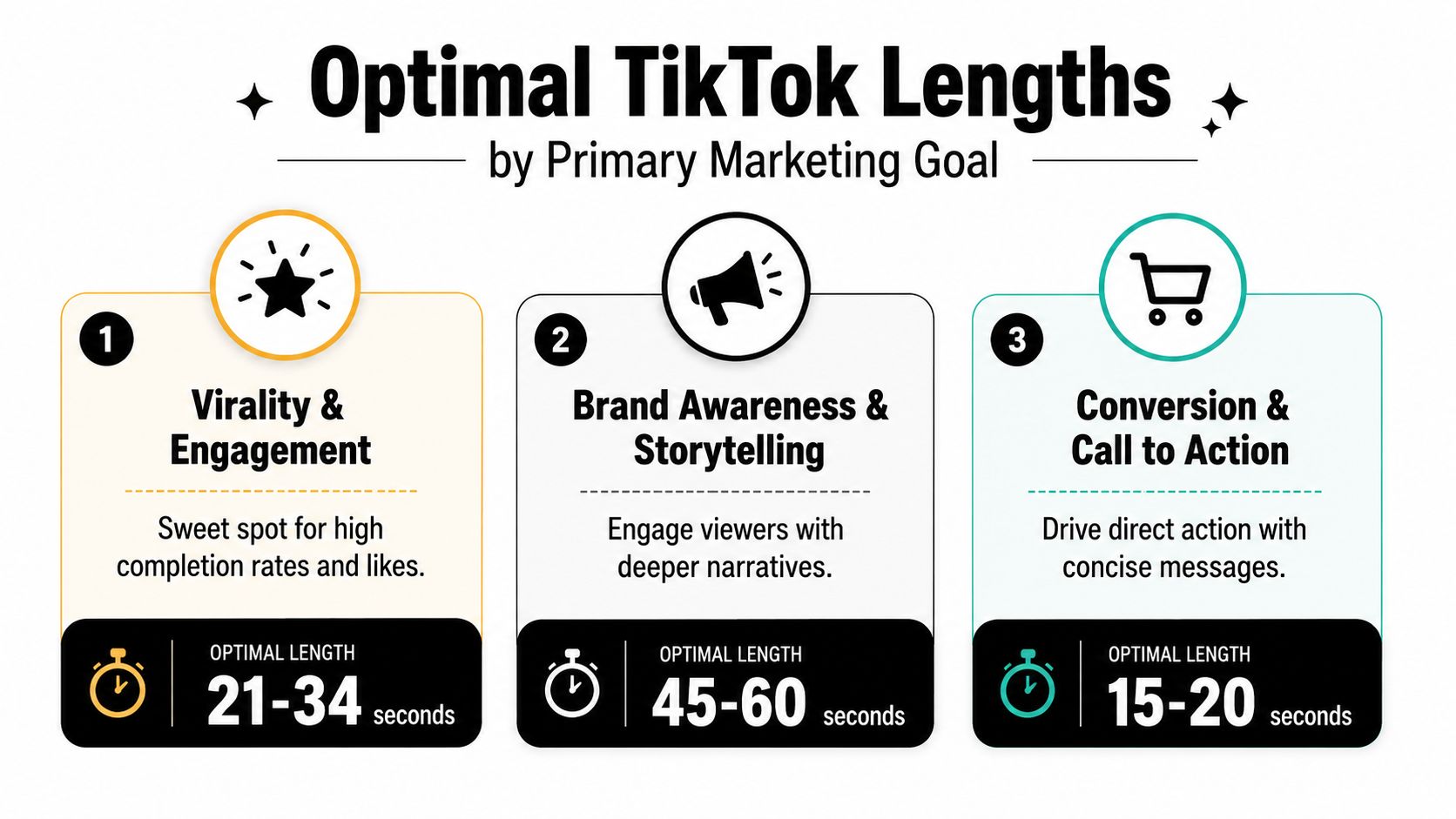
If you want engagement
Start with 21 to 34 seconds.
Analysts at Opus found that a large share of highly liked TikTok videos falls into that window in their TikTok length and retention analysis. That lines up with what works in actual content review. This range is long enough to create a pattern break, deliver one strong point, and end before attention fades.
Use it for content that wins on reaction speed:
- Story-led clips: founder moments, customer anecdotes, quick lessons
- Reaction content: commentary, stitches, fast opinions
- Single-point education: one mistake, one fix, one takeaway
This is usually the right range for reach-focused posts. It is also where many creators build audience fastest, especially if they are still learning hooks, pacing, and retention. If that is your current priority, this guide to growing on TikTok is useful because it ties content decisions to audience growth instead of chasing views in isolation.
If you want qualified attention
Move to 31 to 60 seconds.
This range gives you enough time to explain why the topic matters, add proof, and answer the obvious objection before the viewer scrolls. That trade-off matters for brands, consultants, SaaS teams, and service businesses. A short clip may get more taps. A slightly longer one often brings in better-fit viewers because they have heard enough to understand the value.
Here’s a useful visual reference before you script your next clip:
Product explainers, myth-busting, objection handling, and educational breakdowns tend to work. The viewer is giving you more time, so the script has to earn it. Every sentence needs a job.
The same runtime will also behave differently across platforms. These short-form video platform differences matter if you are repurposing the same idea across TikTok and Reels.
If you want monetization
Use 60 seconds or more, with a clear reason for every extra beat.
According to BigMotion’s breakdown of ideal TikTok video length, creators in the Creator Rewards Program need videos over 60 seconds to qualify for monetization. That changes the editing strategy completely. A 25-second clip can be strong for discovery and still produce zero direct program revenue.
This is the trade-off many guides skip. Virality often favors compression. Monetization favors sustained attention. If revenue is the goal, build for watch session quality, not just completion rate.
For interviews, webinars, podcasts, and product walkthroughs, the practical move is to create two versions. Cut one short version to win distribution. Cut one 60-second-plus version to capture revenue and give the audience enough context to trust the message.
Matching Video Length to Your Content Type
Goal matters, but format matters too. A tutorial and a comedy clip shouldn’t be edited the same way.
Entertainment needs compression
For entertaining content, the best-performing window is 18 to 31 seconds, based on this TikTok video reference from lana.k.social.
That tracks with how entertainment works on the platform. Humor, trends, reactions, and visual reveals lose momentum when they’re stretched. The viewer wants setup, punchline, and exit.
Keep these clips tight:
- Trend responses: Get to the recognizable moment quickly
- Humor and skits: Cut setup ruthlessly
- Visual reveals: Show the payoff fast
Educational content needs room
Educational content performs best at 42 to 54 seconds. That extra time gives you space to establish the problem, explain the point, and land the takeaway without sounding rushed.
This is especially important for coaches, consultants, SaaS marketers, and subject-matter experts. If you trim educational clips to entertainment pacing, you usually strip out the very thing that makes them valuable.
If you’re also publishing across multiple short-form channels, short-form video platform differences are worth understanding because what feels properly paced on TikTok won’t always map cleanly to Reels.
Educational TikToks don’t need to be slow. They need to be complete.
A Practical Workflow for Creating Perfect Clips
The easiest way to get length wrong is to make one edit and expect it to solve every goal. A better workflow starts with one source video and creates multiple cuts on purpose.
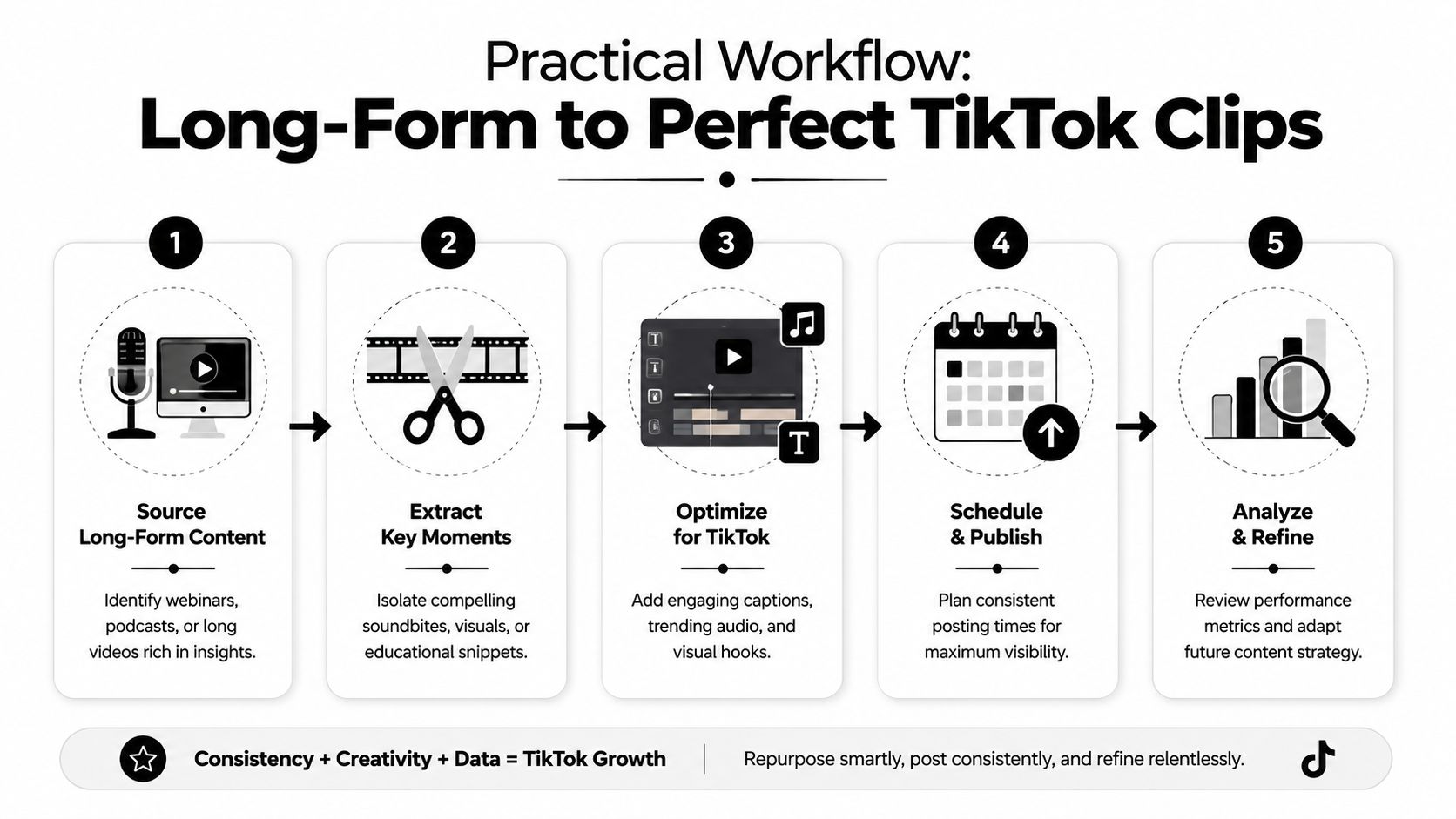
Build two cuts from one source video
According to Joyspace’s video length guide, TikTok has a viral sweet spot of 24 to 38 seconds and a deep-dive sweet spot of 60 to 90 seconds. That’s a practical repurposing model.
From one podcast, webinar, or interview segment, produce:
-
A short cut for engagement
- Hook fast
- Deliver one idea
- End cleanly
-
A longer cut for depth or monetization
- Keep the core argument intact
- Use pattern changes and captions to maintain pace
- Make the payoff worth the extra time
If you still prefer manual trimming on desktop before handing clips off, Mac video editing for content creators covers a lightweight workflow.
For teams doing this regularly, a repeatable video production workflow matters more than any one edit. The bottleneck is rarely ideas. It’s selecting moments, resizing, captioning, and scheduling consistently.
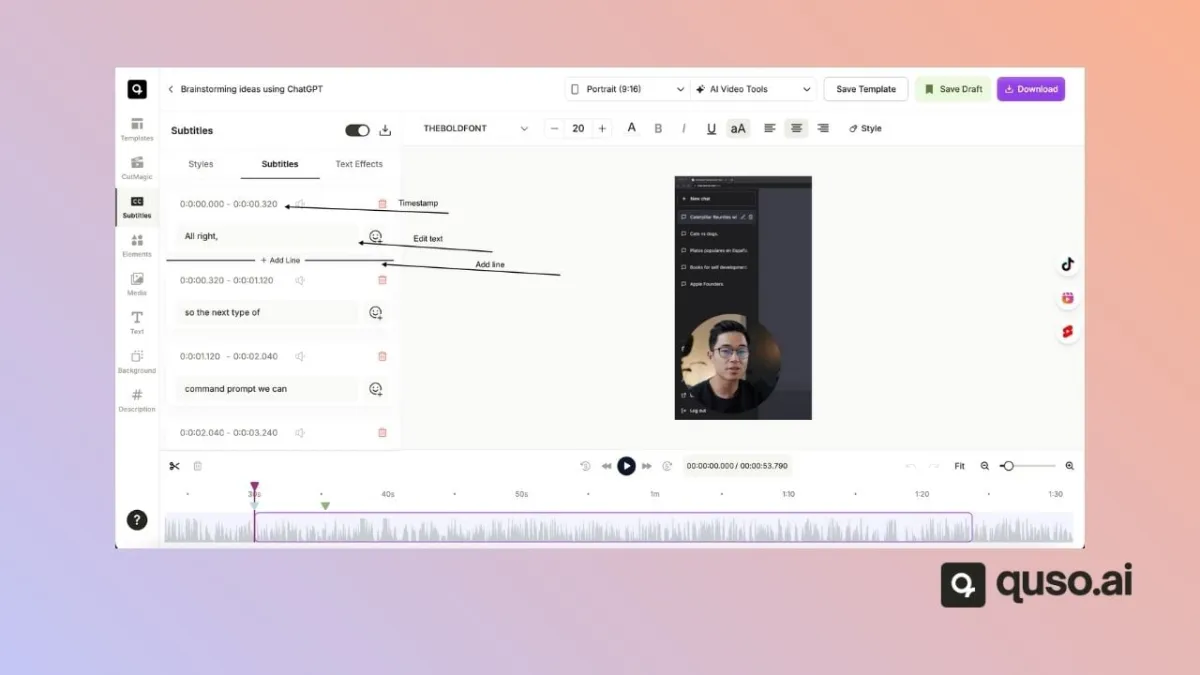
One tool built for that exact process is quso.ai, which repurposes long video into short clips, adds auto-captions, and helps schedule them for distribution.
Design for safe zones before you publish
This is the practical mistake most competitors ignore. Your video can be the right length and still underperform if the important text sits under TikTok’s interface.
Keep these safe-zone rules in mind:
- Leave space at the bottom: Captions and CTAs can get crowded by the caption area and controls
- Avoid edge-to-edge text: UI elements can cover words on the sides depending on device and overlays
- Put key hooks higher in frame: Your opening text should stay clear and readable without competing with buttons
- Check subtitle stacking: Auto-captions, native captions, and on-screen text can collide if you don’t plan placement
A clean 65-second clip with readable text usually beats a messy 20-second clip where the hook is blocked.
Frequently Asked Questions About TikTok Video Length
Should I repost the same video at a different length
Yes, if the second version serves a different job.
A shorter cut can improve reach when the original takes too long to make its point. A longer cut can improve watch time, trust, or monetization potential when the first edit removed context people needed. That trade-off matters. TikTok does not reward the same behavior equally across every goal.
Rework the hook, pacing, and close. A post that is merely trimmed usually feels recycled. A post rebuilt for a different objective can perform like a new asset.
Should a series use the same length every time
Keep the structure familiar, not identical.
Viewers should recognize the series fast. That could mean a consistent opening format, visual style, or promise. Runtime can still flex based on the topic. A reaction series may work in tight bursts, while an educational series often needs more room to explain one useful point clearly.
Consistency builds recall. Forced uniformity usually hurts retention.
Do loops still matter for short TikToks
Yes, but they matter most when the loop strengthens the idea instead of hiding the payoff.
For very short clips, a clean ending that rolls back into the opening can increase rewatches. That can help distribution. It can also backfire if the video becomes so vague that viewers remember the trick but not the message, product, or creator.
For brands and creators selling something, that distinction matters. A 12-second loop may win on repeat views, while a 45 to 75 second version may do more for trust and conversions.
Are 3 minute and 10 minute TikToks worth testing
They are worth testing for specific formats.
Use them for stories with real tension, product breakdowns, tutorials, case studies, and commentary that needs buildup. Do not use them as a default container for content that should have been edited tighter. Length only helps when each segment earns the next few seconds.
For many teams, the smarter test is simpler. Run one short version built for reach and one longer version built for deeper watch time or monetization. That gives you a cleaner read on what the topic can do at each stage of the funnel.
What’s the safest default starting point
Start with your goal, then choose the cut.
If the priority is reach, produce a compact version that gets to the payoff fast. If the priority is qualified attention, revenue share eligibility, or stronger conversion intent, make a second version that stays over the longer threshold and delivers enough substance to justify it.
That approach is more useful than chasing one magic runtime. TikTok video length is a strategy choice, not a fixed rule.
If you’re turning webinars, podcasts, demos, or talking-head videos into TikToks regularly, quso.ai is built for that workflow. It can turn long recordings into shorter clips, add auto-captions, and schedule posts without rebuilding the process every time.