15 High-Impact Video Hook Ideas for Engaging Clips
A viewer decides fast. Meta’s creative guidance for mobile video recommends communicating the key message early, often within the first few seconds, because attention drops quickly on feed-based platforms. That sets the practical constraint for video hook ideas. The opening has to stop the scroll, signal relevance, and buy enough attention for the rest of the clip to work.
This article approaches hooks as a testable system, not a writing exercise. You’ll get 15 categorized, copy-pasteable templates with short scripts, safe-zone guidance, and A/B testing prompts. If you publish across vertical platforms, small framing changes often outperform full rewrites.
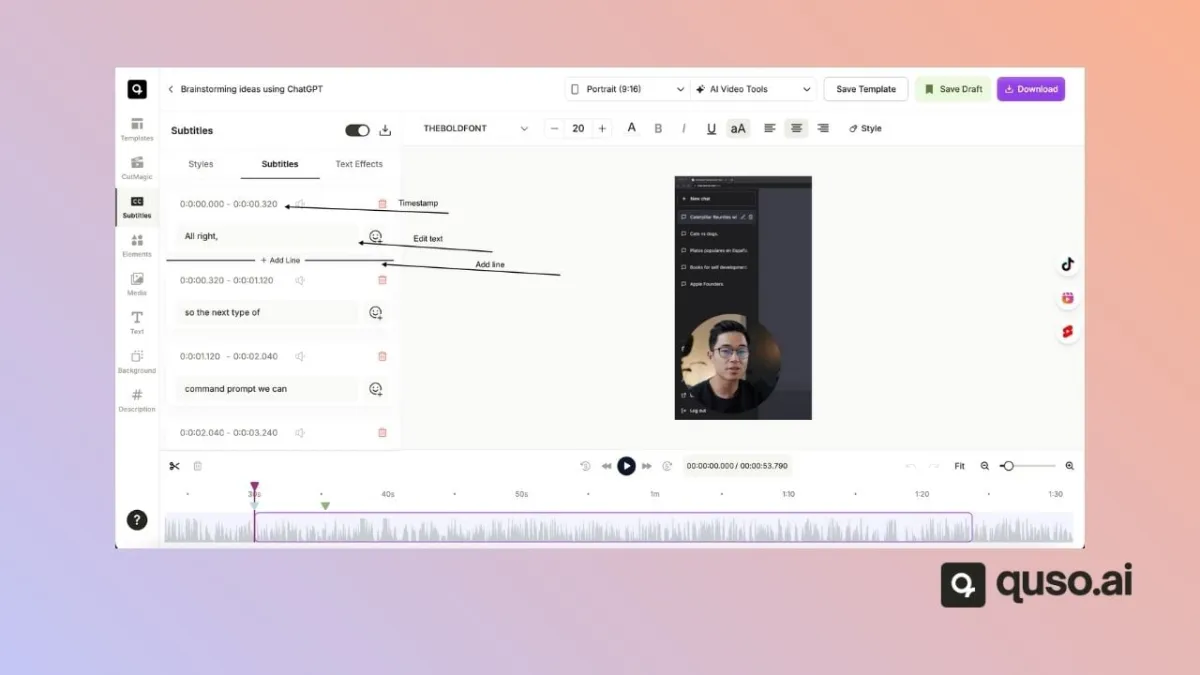
That matters even more when you repurpose one source asset into several cuts. A podcast segment can become three TikTok openings, two Reels variants, and a Shorts version with different on-screen text placement. quso.ai fits that workflow well because it helps turn one long-form recording into multiple social edits, then queue the winners for distribution. For platform-specific examples, see these TikTok hook ideas and testing angles.
One operational detail gets missed in many hook roundups. Safe zones affect performance. If the first line of text sits under captions, profile UI, or action buttons, the hook loses clarity before the idea itself gets judged. The templates below account for that, so you can test the copy, the visual crop, and the placement as separate variables.
Table of Contents
- Why Hooks Decide Reach
- Anatomy of a Strong Hook
- 1. The Pattern Interrupt
- 2. The Curiosity Gap
- 3. The Story Hook
- 4. The Contradiction Myth-Bust Hook
- 5. The Bold Claim Contrarian Take
- 6. The Question Hook
- 7. The Shocking Statistic Data Drop
- 8. The Transformation Before-After Hook
- 9. The Social Proof Authority Hook
- 10. The Listicle Number Hook
- 11. The Demonstration How-To Hook
- 12. The Relatable Problem Empathy Hook
- 13. The Unexpected Pivot Subversion Hook
- 14. The Celebrity Name-Drop Hook
- 15. The Speed Efficiency Hack Hook
- 15-Point Video Hook Comparison
- Next Steps Test and Optimize Your Hooks
- FAQ
Why Hooks Decide Reach
Wistia’s latest benchmark found that shorter videos retain more viewers than longer ones, with engagement dropping as runtime expands across business video categories. That pattern matters even more on feeds where the viewer decides in a fraction of a second whether to keep watching or scroll.
A hook sets that decision frame. It establishes the payoff early enough for the platform to earn a second, third, and fifth second of watch time. For social teams focused on https://imagestudio.com/editorial/post/why-video-content-dominates-social-media-algorithms/">optimizing video for social algorithms, the opening is not a creative extra. It is the variable that determines whether the rest of the clip gets a chance to work.
The practical implication is simple. A repurposed clip should start at the moment of tension, proof, or consequence, not at the setup. If a podcast segment needs five seconds of context before the point becomes clear, trim to the sentence that carries the claim and rebuild the setup with on-screen text.
Practical rule: Open with the outcome, contradiction, or stakes.
This is also why a swipe file of hook templates beats improvisation. With 15 repeatable formats, each adapted by platform, safe-zone placement, and test prompt, teams can compare openings systematically instead of guessing. In quso.ai, that means cutting multiple first-frame variants from one source clip, scheduling them by channel, and measuring which opening holds attention on TikTok, Reels, and Shorts. The strongest hook is rarely the one that sounds smartest in edit. It is the one that earns the next second consistently.
Anatomy of a Strong Hook
Wistia’s analysis of video engagement shows that early seconds carry a disproportionate share of audience drop-off, which makes opening design a retention problem before it becomes a creative one. A strong hook gives the viewer three answers at once. Why this matters, why now, and why this clip is different from the last one in the feed.
For creators and B2B teams repurposing long-form content, the editing job changes with that constraint. Pull the line that creates tension, specificity, or consequence first. Then rebuild missing context with text, framing, and pacing.
The four-part alignment check
Hooks underperform when the first signals compete instead of reinforcing the same promise. Review the opening as a four-part system:
- Spoken line: the first claim, question, or tension cue the viewer hears
- Visual action: the first motion, cut, gesture, or object on screen
- On-screen text: the condensed payoff statement, usually 3 to 8 words
- Background sound: the music, silence, or sound effect that sets urgency or tone
Researchers at Microsoft found that shifts in attention on digital media happen quickly, which is why mixed signals in the first frames create friction fast. If the audio suggests urgency, the text reads like a tutorial title, and the visual opens on a static wide shot, the viewer has to work to decode the clip. Many will not.
A swipe-file approach proves more effective than intuition. In a categorized set of 15 hook templates, each opening should preserve the same core promise across voice, text, and frame, then vary one element at a time for testing. For example, keep the spoken line fixed, test two text overlays, and compare hold rate by platform. TikTok may reward a faster first-frame cut. Reels may respond better to cleaner on-screen text. Shorts often benefits from tighter title-safe placement.
For repurposed clips, safe-zone discipline matters as much as trimming. Keep the main hook text in the center band so captions, platform buttons, and profile UI do not cover the keyword or outcome. If you are cutting from a webinar or podcast, pair the first line with a matching visual and readable auto-captions, then export two or three variants inside quso.ai for scheduled platform-specific tests.
1. The Pattern Interrupt
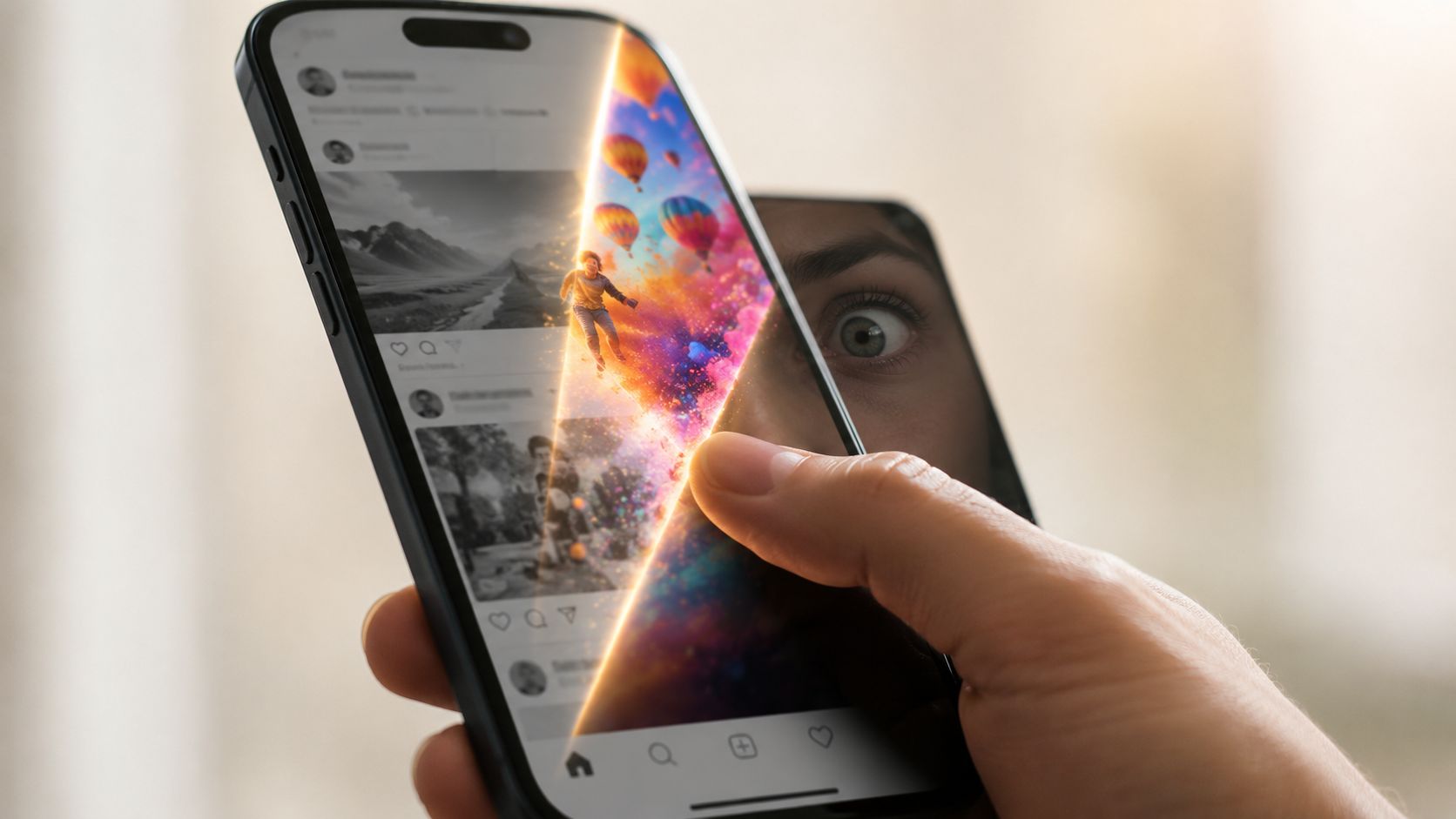
A pattern interrupt works when the opening feels visually or sonically “wrong” in a useful way. The cut is abrupt. The first frame is unusually close. The text disagrees with the audio. The point is to break the viewer’s scroll rhythm.
Short script templates:
- “Wrong. Many start this backward.”
- “Wait. Don’t copy this strategy.”
- “This looked like a good idea. It wasn’t.”
- “You’ve seen this advice before. Ignore it.”
- “The first mistake is right here.”
Safe-zone tip
Keep the key word, usually “wrong,” “stop,” or “wait,” in the middle band of the frame. Avoid placing it near the bottom where captions, buttons, or profile UI may sit on mobile.
A/B test prompt
Test one version with a silent jarring cut and one with a sound-led interruption. If you need examples designed for vertical short-form, study these hooks for TikTok.
2. The Curiosity Gap
The curiosity gap opens a loop the viewer wants closed. It works best when the claim is specific enough to feel credible, but incomplete enough to force the next few seconds.
Short script templates:
- “Nobody explains this part of content growth.”
- “This is why your clips feel flat.”
- “The reason your short videos don’t land.”
- “One edit choice is killing this video.”
- “What most creators miss in the first frame.”
Use this when your source video contains a sharp insight buried in the middle. Pull the consequence first. Then reveal the reason.
Strong curiosity hooks don’t hide the topic. They hide the resolution.
Safe-zone tip
Put the tease in the top third, not the absolute top edge. Platform chrome often crowds the corners. The text should be readable without forcing the viewer to hunt for it.
A/B test prompt
Run one version as a statement and one as a question. Example: “This is why your clips don’t land” versus “Why don’t your clips land?” Question versions often feel more personal. Statement versions often feel more authoritative.
3. The Story Hook
A story hook works when the conflict is visible immediately. Don’t start with biography. Start with the turn.
Short script templates:
- “I almost scrapped this campaign the night before launch.”
- “My client was ready to quit, then this changed.”
- “I spent weeks making the wrong kind of content.”
- “We thought this clip would flop. It didn’t.”
- “I learned this after a painful post went nowhere.”
This style is useful for consultants, educators, and SaaS marketers because it humanizes expertise without sounding like a lecture.
Safe-zone tip
If your face is carrying the emotion, keep your text shorter and place it higher. Don’t cover the expression that sells the conflict.
A/B test prompt
Test a stakes-first opener against a lesson-first opener. “I almost lost the launch” often creates more tension than “Here’s what I learned from a bad launch.”
4. The Contradiction Myth-Bust Hook
This hook wins by flipping a belief the audience already holds. The first second should present the common belief. The second beat should overturn it.
Short script templates:
- “Posting more isn’t the fix.”
- “You don’t need a longer clip. You need a sharper start.”
- “More tips won’t save a weak opening.”
- “The best moment in your long video probably isn’t the intro.”
- “A polished video can still fail fast.”
Safe-zone tip
Show the myth as on-screen text, then cut to your face delivering the reversal. That visual change gives the contradiction more force.
A/B test prompt
Try one version with the myth in text only and another with the myth spoken aloud. Text-first often feels faster. Spoken-first can feel more direct.
5. The Bold Claim Contrarian Take
A contrarian take isn’t the same as myth-busting. It’s a point of view. The value comes from a defensible opinion that people want to challenge, agree with, or forward.
Short script templates:
- “Consistency is overrated if your openings are weak.”
- “Most short-form strategy advice starts too late.”
- “The hook matters more than the topic in crowded feeds.”
- “Your best clip might come from the middle of the webinar.”
- “Great editing can’t rescue a soft first line.”
Use this sparingly. A bold claim with no follow-through creates clicks, not trust.
Safe-zone tip
If the claim is long, split it across two quick text beats instead of shrinking the font. Tiny text kills the effect.
A/B test prompt
Compare a hard-edged version against a softened one. “Consistency is overrated” versus “Consistency is overrated in short-form if the opening is weak.” The sharper line may stop more thumbs. The qualified line may keep more viewers.
6. The Question Hook
Questions earn attention because they ask the viewer to do one small piece of cognitive work. The strongest version is specific enough to trigger self-diagnosis, but short enough to read before the thumb keeps moving.
This hook type works well for repurposed clips because it frames the pain point before the excerpt delivers the answer. In a quso.ai workflow, that gives you a clean testing variable. Keep the body of the clip the same, then schedule multiple versions with different opening questions to see which framing pulls stronger retention by platform.
Short script templates:
- “Are you wasting your best moments inside long videos?”
- “Do your clips explain too early?”
- “Why do some short videos lose people before the point?”
- “Are your captions helping the hook or covering it?”
- “What if the main problem is your first frame?”
A question hook usually beats a vague opener when it names a clear friction point. Broad questions such as “Want more views?” blend into the feed. Narrow questions such as “Are your captions blocking the first five words?” give the viewer a fast yes-or-no check. That creates better message match, especially for audiences comparing your clip against dozens of similar posts.
Safe-zone tip
Keep the question inside the platform safe zone and stack it in one or two short lines. On TikTok, Reels, and Shorts, avoid pushing key words into the lower third where UI elements, captions, or profile overlays can cover them.
A/B test prompt
Test diagnostic versus provocative phrasing. Example: “Are your clips explaining too early?” versus “Are you killing retention in the first sentence?” Then compare results by platform. Instagram often rewards cleaner, less aggressive wording. TikTok can tolerate sharper phrasing if the visual supports it.
7. The Shocking Statistic Data Drop
Numbers can stop the scroll, but only when the stat is relevant and sourced. Use a data hook when your audience values proof and the number directly changes how they should edit or publish.
Short script templates:
- “The key battle happens in three seconds.”
- “Most of the win or loss happens before your point arrives.”
- “This one number should change how you cut clips.”
- “If your opening drifts, the rest of the video won’t matter.”
- “Here’s the metric that should shape your first frame.”
One stat is especially useful here. 63% of videos with the highest click-through rates hook viewers within the first three seconds. For creators repurposing long videos, that means the opening excerpt has to carry the full burden of attention.
Safe-zone tip
Make the number the largest element on screen. Put the explanation beneath it, not beside it.
A/B test prompt
Test the same stat in two framings: risk versus opportunity. “You lose the viewer in three seconds” versus “You can win the click in three seconds.”
8. The Transformation Before-After Hook

Before-and-after hooks work because the outcome arrives before the explanation. The viewer sees the gap and wants the bridge.
Short script templates:
- “From rambling webinar clip to tight Reel.”
- “Before, this intro dragged. After, it finally clicked.”
- “Same video, different opening.”
- “This clip looked dead until we changed the first line.”
- “Watch the weak version, then the fixed one.”
Safe-zone tip
Label “before” and “after” clearly, but keep both labels away from the bottom interface stack. Split-screen layouts already reduce usable text space.
A/B test prompt
Test visual-first transformation against text-first transformation. In some niches, seeing the change instantly works better than reading what changed.
9. The Social Proof Authority Hook
Authority hooks work when the credential earns the next sentence. Lead with the reason the viewer should trust the advice, then move quickly to the insight.
Short script templates:
- “After years of cutting webinars into short clips, this is what matters first.”
- “Working with B2B teams taught me one recurring hook problem.”
- “After reviewing dozens of sales videos, the intro issue is usually the same.”
- “If you manage social for a brand, watch the first frame harder.”
- “In educational content, clarity often loses to weak pacing at the start.”
Safe-zone tip
If you’re using a lower-third style credential, keep it brief. Long credentials look self-important and consume the same visual space your hook needs.
A/B test prompt
Test credential-led versus insight-led openings. Some audiences convert better when you earn trust first. Others prefer to hear the point immediately.
10. The Listicle Number Hook
Listicle hooks promise structure. That makes them easy to scan and easy to save.
Short script templates:
- “3 hook fixes for underperforming clips.”
- “5 opening lines I’d test on this webinar.”
- “4 ways to make a short clip feel immediate.”
- “3 captions mistakes in the first frame.”
- “5 hook angles for educational videos.”
This format pairs well with repurposing because one long list can become multiple short videos. Cut the full list. Then cut each item as a standalone short.
Safe-zone tip
Keep the number and noun close together. “3 hook fixes” reads faster than splitting the phrase across separate corners.
A/B test prompt
Try one odd-number version and one tighter version. A five-point promise may attract more saves. A three-point promise may get more completions because it feels lighter.
11. The Demonstration How-To Hook
The best how-to hooks start with motion. Don’t announce the tutorial and then wait. Start doing the thing.
Here’s a visual example format many creators use before breaking down the steps:
Short script templates:
- “Watch me turn this long clip into a short opener.”
- “I’m rewriting this weak hook in real time.”
- “Here’s how I cut the first three seconds.”
- “Let me show you the opening change that matters.”
- “Watch this intro go from slow to usable.”
The category itself is durable. One roundup identifies six core hook types, including questions, bold statements, statistics, problem identification, promises, and visual demonstrations, with examples for each in this hook guide.
Safe-zone tip
When the hands or cursor are the star, keep the text above the action path. Don’t place captions over the exact thing you want the viewer to inspect.
A/B test prompt
Compare “watch me” phrasing against “here’s how” phrasing. “Watch me” can create stronger curiosity. “Here’s how” can attract more intentional learners. If you want more examples, this guide on how to write hook pairs well with demo-style clips.
12. The Relatable Problem Empathy Hook

Empathy hooks work when the pain is specific enough to feel lived-in. Broad struggle language doesn’t land. Familiar frustration does.
Short script templates:
- “You clipped the best part, and it still didn’t hold.”
- “Your video says something useful, but nobody stays for it.”
- “You spent time editing, but the first frame still feels late.”
- “The content is good. The opening isn’t.”
- “You’re not out of ideas. You’re starting in the wrong place.”
Safe-zone tip
If the visual already shows frustration, don’t overload the frame with too much copy. Let the expression and one short line do the work.
A/B test prompt
Test a tactical pain point versus an emotional one. “Your intro feels late” versus “You keep posting good videos that don’t stick.” Different audiences identify with different forms of friction.
13. The Unexpected Pivot Subversion Hook
A pivot hook sets one expectation, then flips it before the viewer settles. That moment of reversal is the hook.
Short script templates:
- “You don’t need more clips. You need better openings.”
- “This isn’t an editing problem. It’s a framing problem.”
- “The problem isn’t that your video is too long. It’s that the payoff starts too late.”
- “You shouldn’t cut more content from the webinar. You should cut differently.”
- “Improving visuals is often the initial focus. I’d fix the first line first.”
A useful clue here comes from broader hook concentration. Analysis of 77,946 clips found that 82% of high-performing marketing and ad hooks fall into just three categories, while the industry average hook rate on TikTok is 34.34%. The takeaway isn’t to chase novelty everywhere. It’s to pivot inside proven structures.
The best subversion hook doesn’t confuse the viewer. It redirects them.
Safe-zone tip
Use a transition word on screen if the pivot is subtle. For example, “Instead” can help the reversal register instantly.
A/B test prompt
Test a clean pivot against a more dramatic one. Some audiences respond better to understated correction than to a louder twist.
14. The Celebrity Name-Drop Hook
A name-drop hook borrows attention, but it only works when the connection is immediate and relevant.
Short script templates:
- “What top interviewers understand about opening tension.”
- “Why famous founders often open with a sharper point than brands do.”
- “What creator-led channels get right in the first sentence.”
- “What high-profile podcasts can teach you about clip selection.”
- “Why big personalities still need a tighter first frame.”
Safe-zone tip
Make the name readable fast. One proper noun is enough. More than that and the hook starts feeling like backstory.
A/B test prompt
Run one version with the name and one without it. If performance doesn’t change, the insight may be strong enough on its own.
15. The Speed Efficiency Hack Hook
Speed hooks appeal to teams under output pressure. They frame the first second around time saved, version count, or production lift, which makes them effective for creators testing multiple intros from one source clip.
Short script templates:
- “How to turn one webinar into multiple short hook tests.”
- “A faster way to find the best opener in a long recording.”
- “How I cut several intro variants without re-recording.”
- “The quickest way to test one message across three platforms.”
- “How to publish multiple hook versions from one source video.”
The strategic value is not just pace. It is extraction. Existing guides explain short-form hooks, but they rarely explain how to extract them from long-form content. That gap is exactly what this video repurposing workflow and this short-form strategy guide are meant to solve.
For quso.ai users, this hook type fits a repeatable workflow: cut several openings from the same asset, adapt each one for platform-specific safe zones, then schedule variants into separate test windows. That turns one recording into a structured swipe-file exercise instead of a single creative guess.
Safe-zone tip
Keep the promise visible in the center-safe area. Phrases like “faster way” or “3 hook versions” should sit clear of UI overlays on Reels, Shorts, and TikTok. A clean first frame supports the efficiency claim. Crowded text weakens it.
A/B test prompt
Test speed-led wording against throughput-led wording. “Faster way to cut hooks” versus “Turn one video into five tests.” Then test platform-specific edits: tighter caption spacing for TikTok, larger top-third text for Shorts, and more breathing room near the bottom for Reels.
15-Point Video Hook Comparison
| Hook | Implementation complexity | Resource requirements | Expected outcomes | Ideal use cases | Key advantages |
|---|---|---|---|---|---|
| The Pattern Interrupt (Silent/Sound Clash) | Low–Medium | Basic editing, sound design | High immediate stop rate; variable long-term watch % | Short-form educational, business, wellness | Strong stopping power; low production overhead |
| The Curiosity Gap (Open Loop) | Low | Minimal editing, clear script tease | Very high completion rates if payoff delivered | Business, education, listicles | Drives watch-through and repeatable format |
| The Story Hook (Human Conflict/Stakes) | Medium–High | Authentic footage, narrative craft | High memorability, shares and saves | Personal brands, testimonials, coaching | Builds emotional connection and trust |
| The Contradiction / Myth-Bust Hook | Medium | Research or examples to back flip | High engagement and debate | Education, B2B, social media strategy | Positions creator as expert, boosts comments |
| The Bold Claim / Contrarian Take | Medium | Strong rationale or data to defend claim | High comments and polarization | Business, tech, opinion-driven niches | Establishes clear POV and sparks debate |
| The Question Hook (Direct Address) | Low | Scripted question, simple overlay | Increased relevance and mental engagement | Coaching, sales, education | Personal connection; easy to produce and adapt |
| The Shocking Statistic / Data Drop | Medium | Credible data source, visual overlay | High authority and stopping power | B2B, finance, education, SaaS | Feels authoritative; specific and persuasive |
| The Transformation / Before-After Hook | Medium | Before/after footage or visuals | Satisfying reveals; high retention to see method | Tutorials, fitness, productivity, design | Visual proof of results; compelling contrast |
| The Social Proof / Authority Hook | Low–Medium | Credentials, case numbers or testimonials | Quick credibility and trust from viewers | Coaching, B2B, professional services | Shortens trust-building; attracts primed viewers |
| The Listicle Number Hook | Low | Clear items list, numbered overlays | High completion; scannable and shareable | Tips, tools, education, business strategy | Structured, repeatable, easy to consume |
| The Demonstration / How-To Hook | Medium | Setup for live demo or screen recording | Very high watch-through for actionable content | Tutorials, DIY, cooking, design, coding | Practical, reproducible, strong retention |
| The Relatable Problem / Empathy Hook | Low | Specific scenario and empathetic delivery | High emotional connection and shares | Coaching, wellness, lifestyle, personal dev | Builds rapport; positions creator as ally |
| The Unexpected Pivot / Subversion Hook | Medium | Clear setup and justified pivot, supporting evidence | High curiosity and watch-through if logical | Business, growth, strategy, education | Memorable; signals original thinking |
| The Celebrity / Name-Drop Hook | Low–Medium | Research linking celebrity to insight | High initial clicks when relevant | Analysis, entrepreneurship, tech commentary | Borrowed attention; curiosity via familiar names |
| The Speed / Efficiency Hack Hook | Low–Medium | Demonstrable workflow or proof of time saved | High perceived ROI and intent to apply | Productivity, software, business, automation | Clear, measurable benefit; appeals to busy audiences |
Next Steps Test and Optimize Your Hooks
Retention testing usually produces wider performance gaps than small production tweaks. The practical implication is simple. A stronger opening often changes reach more than a better camera angle or cleaner B-roll.
Run hook tests as controlled experiments, not creative guesswork. Start with one source asset, such as a webinar, interview, demo, or podcast. Cut three to five hook variants from the same moment of value, then change one variable per version: spoken first line, opening visual, text overlay, or cut speed. That structure gives you a usable read on what improved hold rate, rewatches, or click-through.
A simple test matrix works well:
- Variant A: direct benefit hook
- Variant B: contradiction or myth-bust hook
- Variant C: question hook
- Variant D: speed or efficiency hook
- Variant E: proof-first hook
Platform adaptation matters, but the promise should stay consistent. TikTok often supports faster visual change and more abrupt openings. Reels usually performs better with cleaner framing and lower text density. Shorts often gives educational clips more room if the payoff is obvious from the first beat. Test the same hook category across platforms before you rewrite the concept entirely.
Placement affects results. Keep the primary hook text in the center band or upper-middle area, where platform UI is less likely to hide it. Check auto-captions before publishing. If the caption block covers the keyword, number, or visual proof point that carries the hook, the variant is compromised before the test begins.
This section is where a swipe file becomes useful in production. Build 15 copy-pasteable hook templates, map each one to a specific content type, and run them against the same source clip. Then review results by category, not just by individual post. You will usually find that one or two hook families outperform the rest for a given niche, offer, or presenter style.
For teams using quso.ai, the workflow is straightforward. Clip multiple short variants from one long recording, add captions, keep text inside safe zones, and schedule the tests on a fixed cadence across TikTok, Reels, and Shorts. That setup reduces editing friction and makes A/B testing easier to repeat week after week. For more ideas on generate engaging AI video content, keep the variables tight and the review criteria consistent.
FAQ
What makes a video hook effective
A strong hook creates immediate tension, relevance, or surprise in the opening seconds. In practice, that usually means a direct question, a contradiction, a bold payoff, or a visual shift that interrupts the scroll.
How long should a video hook be
The opening needs to work almost immediately. The most important window is the first three seconds, and many of the strongest clips establish the hook even earlier through text, motion, and audio together.
What are the best video hook ideas for educational content
Questions, demonstrations, curiosity gaps, and listicle hooks tend to work well for educational clips. They promise a clear payoff without forcing the viewer to wait through setup.
How do I turn a long video into short clips with stronger hooks
Find the moment with the clearest tension, outcome, or contradiction. Start there, then add on-screen text and captions that reinforce the same idea. Don’t default to the original intro from the long video.
Where should I place text in a short-form video hook
Keep critical text away from platform UI. The safest approach is to place the main hook line in the upper-middle or center band, then position captions so they don’t cover the key visual or the strongest hook phrase.
If you want to test more than one opening from the same source video, quso.ai gives you a practical way to turn long recordings into short variants, add captions, and schedule them across platforms without rebuilding each clip from scratch.