10 Social Media Engagement Posts to Go Viral in 2026
Tired of posts that get zero comments? You spend hours creating content, but when you publish, all you hear is crickets. That usually happens because most advice about social media engagement posts is stuck at the format level. “Ask a question” isn't a strategy. “Use polls” isn't a system. If the topic is wrong, the audience fit is off, or the prompt asks for the wrong kind of interaction, even a well-designed post falls flat.
That gap matters more now because social media use is already massive. Global social media usage has reached 63.9% of the world's population, and average daily use is 2 hours 21 minutes, according to Smart Insights' roundup of global social media research. People are in-feed. The problem usually isn't access. It's precision.
This guide focuses on strategic approaches that create interaction on purpose. You'll see what works, what usually doesn't, platform-specific templates, and simple execution workflows you can run inside quso.ai. If you're still figuring out the bigger mix of formats and channels, this piece on choosing effective social media content is a useful companion.
Table of Contents
1. Poll and Question Posts
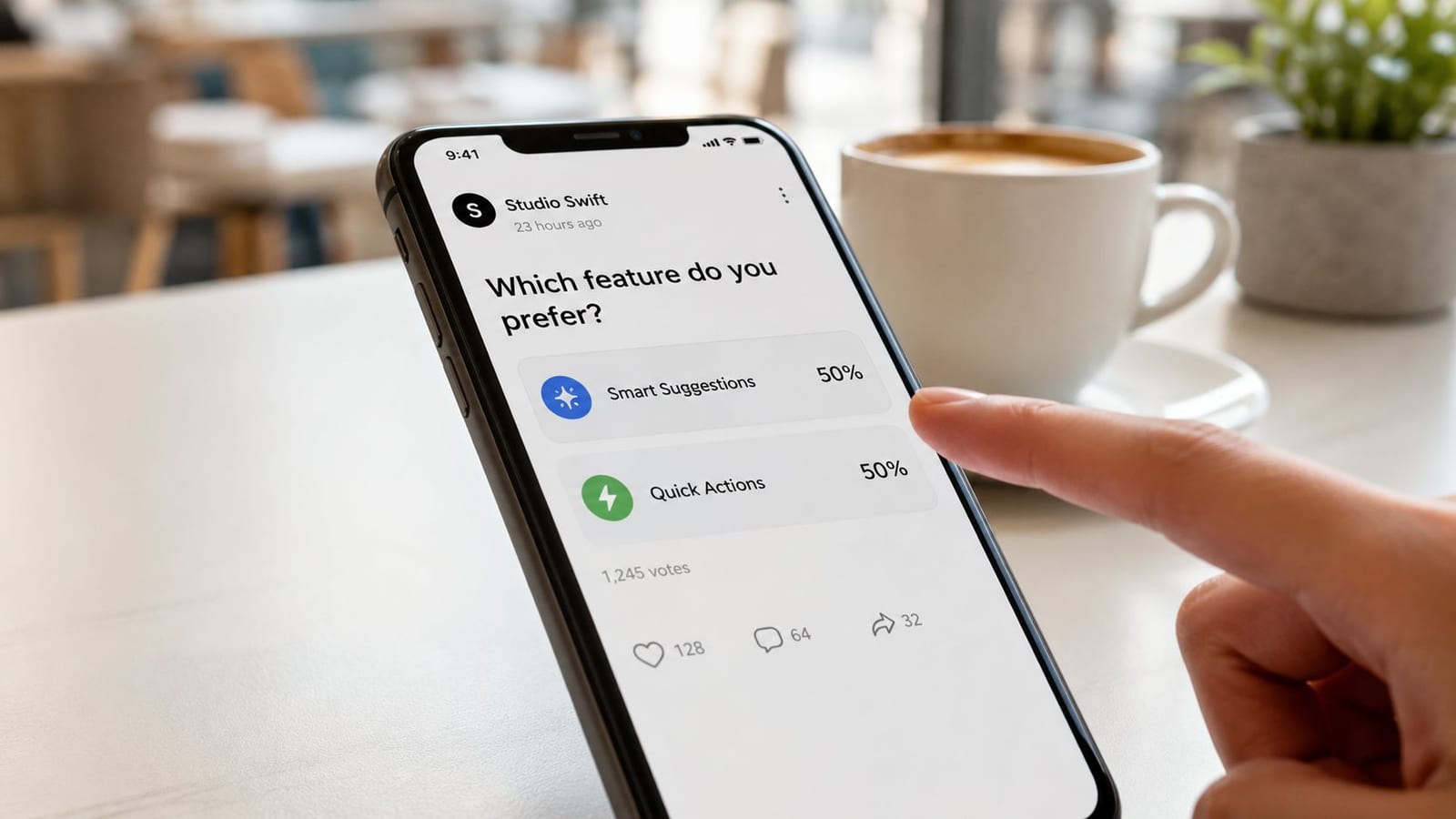
Polls work when they force a useful choice. They fail when they ask broad, low-stakes questions like “What do you think?” and then leave people with no reason to answer. Good social media engagement posts reduce the effort needed to participate while making the response feel specific.
On LinkedIn, I like questions tied to a work trade-off. “Would you rather cut editing time or increase publishing consistency?” gets stronger replies than “What's your biggest content challenge?” On Instagram Stories, A/B polls work best when the options are visual. On X, short binary prompts keep momentum high, and a well-framed Twitter poll guide from quso.ai helps if you want to build a repeatable process for that format.
Use questions to collect decisions, not opinions
A recent systematic review found that engagement is influenced more consistently by post topics, direct requests to interact, and targeted content than by generic prompting, according to this systematic review on social media engagement. That tracks with what practitioners see every day. Relevance beats cleverness.
Try templates like these:
- LinkedIn template: “Which hiring mistake costs teams more right now: slow feedback loops or vague role scopes?”
- Instagram Story template: “Pick tomorrow's post. Audit checklist or caption formulas?”
- TikTok template: “Which version should I make next? Beginner tutorial or advanced breakdown?”
- Facebook template: “What would you fix first in this landing page. Headline, layout, or CTA?”
Practical rule: If the answer won't change your next piece of content, don't ask the question.
The close matters too. Follow up with the result, your interpretation, and the next post shaped by the audience response. That's how a one-off poll becomes an engagement loop.
2. Behind-the-Scenes and Authenticity Posts

Polished content earns attention. Unpolished content earns trust. Behind-the-scenes posts work because they show process, tension, mistakes, and decision-making that polished brand content usually hides.
That doesn't mean dumping random office footage into the feed. Slack-style team culture clips, creator workflow videos in the style of Alex Hormozi, or a simple “what we changed before launch” Reel all work because there's a clear narrative. People want to see how the thing got made, who made it, and what nearly went wrong.
Show work people can relate to
The best behind-the-scenes posts include one human moment and one useful takeaway. A founder reviewing thumbnails. A coach rewriting a webinar opener. A designer killing three concepts before choosing one. Those details create comments because followers can compare your process to their own.
DataReportal reported 5.79 billion social media user identities worldwide at the start of April 2026, and GWI data cited there found the typical user actively uses or visits 6.5 platforms each month. DataReportal also estimated that people spend over 15 billion hours consuming social content every day, which reinforces why strong creative hooks and cross-platform adaptation matter in crowded feeds, as noted in DataReportal's global social media users overview.
A workable BTS workflow is simple:
- Capture the rough moment: Record setup, revisions, mistakes, or team debate.
- Add one sentence of context: Explain what problem you were solving.
- End with an invitation: Ask how the viewer would handle the same situation.
People rarely comment on polished perfection. They comment on decisions, trade-offs, and near-mistakes.
If you use quso.ai here, the practical play is clipping longer working sessions into short BTS moments, then tailoring the caption for LinkedIn, Instagram, or TikTok without rebuilding the post from scratch.
3. User-Generated Content and Community Showcases
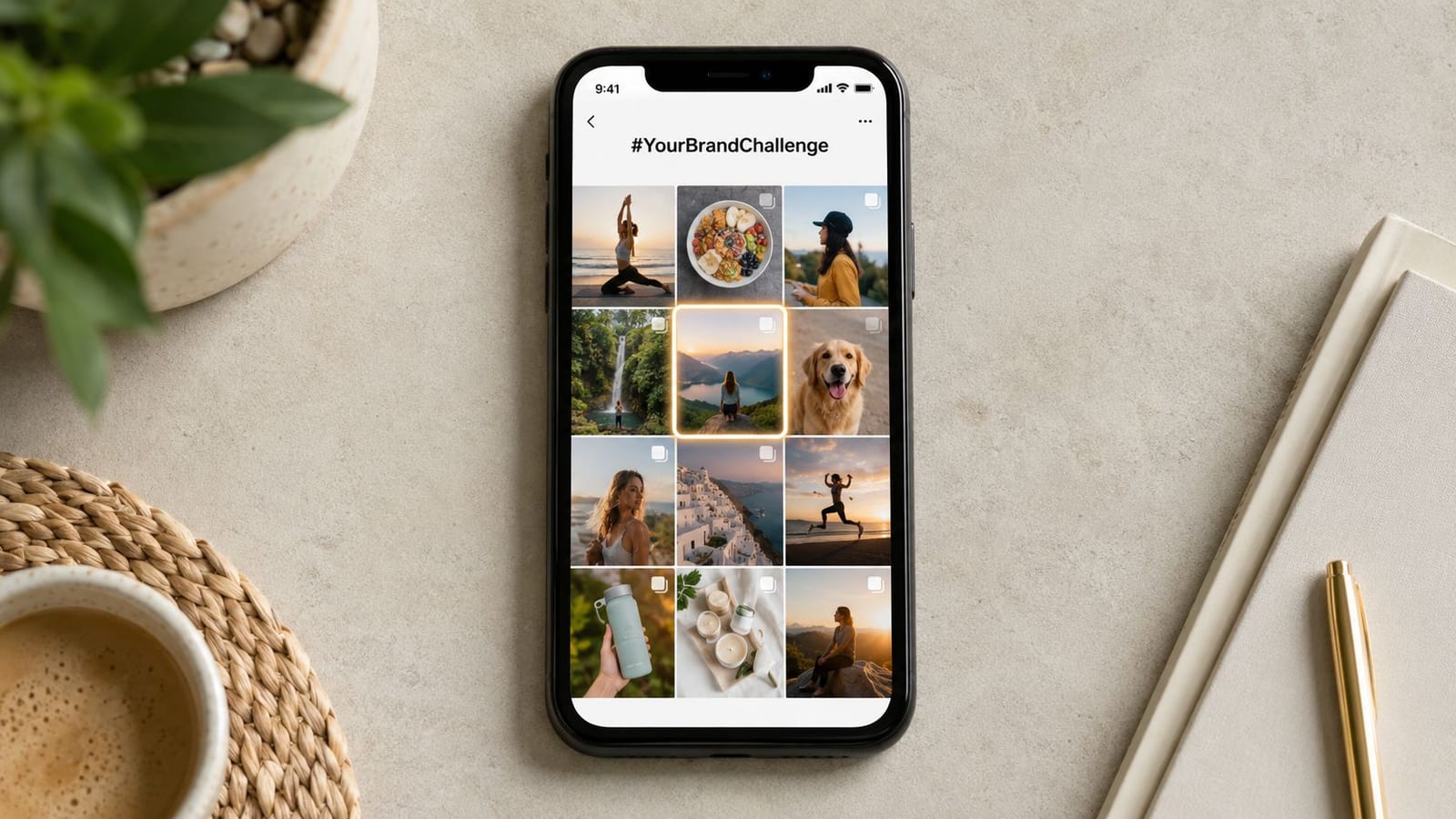
What gets more comments than another polished brand post? A customer showing how your product fits into real life.
User-generated content works because it gives your audience a visible role in the brand, not just a chance to consume it. The strongest community showcases make people feel seen, credited, and worth featuring. That is why GoPro customer footage spread so well, and why Glossier turned customer looks into part of the brand identity instead of treating them like occasional testimonials.
This approach only works when participation is easy. If people have to guess what to post, which tag to use, or whether you will feature them, submissions drop fast. Clear prompts beat broad requests every time. If you want a quick reference point, quso.ai has a useful guide to UGC and what user-generated content means.
Build a showcase people want to join
A strong UGC system has three parts. A specific prompt, a repeatable feature format, and obvious creator credit.
Use prompts tied to behavior you already want to encourage:
- For coaches: “Post your weekly planning board and tag us.”
- For e-commerce brands: “Show how you wear this in a real outfit.”
- For educators: “Share your notes or finished assignment from today's lesson.”
- For SaaS teams: “Record a quick screen capture of your favorite workflow.”
The trade-off is quality versus volume. A broad prompt brings in more submissions, but a narrower prompt gives you better posts to feature and makes your community standard easier to recognize over time.
Platform fit matters here too. Instagram and TikTok are strong for visual showcases, before-and-after results, routines, and creator remixes. LinkedIn works better for customer wins, team spotlights, and professional setups. On YouTube Shorts, community features perform best when the submission is tied to a visible result people can learn from in seconds.
I usually recommend a fixed series name and cadence. “Community Friday.” “Creator of the Week.” “Built With Our Template.” Consistency trains your audience to submit, check back, and tag others. That is the strategic difference between random reposting and a real engagement engine.
Credit the creator in the asset and in the caption. Add one sentence on why their submission stood out. Then tell your audience exactly how to enter the next round. That simple workflow keeps the format active, and it scales well in quso.ai because you can turn one customer story into multiple platform-specific versions without rewriting the post from scratch.
4. Educational and Value-First Content
Educational posts are the safest engagement strategy if your audience buys expertise. They also underperform when creators try to teach too much at once. The best value-first posts solve one problem, in one format, with one clear takeaway.
HubSpot does this well with tactical explainers. Tim Ferriss-style breakdowns work because they simplify a method people can try immediately. Rachel's English built a recognizable teaching style by making each lesson narrow and practical. The pattern is simple. Tight scope, clear structure, useful next step.
Teach one useful thing per post
Use this sequence for educational social media engagement posts:
- Start with the problem: “Your hooks are getting skipped.”
- Show the fix: “Lead with a visible result, not a topic label.”
- Give an example: Rewrite a weak opener into a stronger one.
- Prompt action: Ask followers to post their version in comments.
On YouTube and LinkedIn, broad-interest educational posts can travel well because those platforms support deeper context and broad adult usage. Pew Research reports that YouTube and Facebook remain the most widely used platforms among U.S. adults, while half of U.S. adults use Instagram, according to Pew Research's social media fact sheet. That supports a practical content matrix. Put broad, searchable education on YouTube and Facebook. Turn the visual or interaction-heavy version into Instagram carousels and Reels.
A video example helps here:
When building this in quso.ai, one long teaching video can become short clips, captions, and platform-specific versions. That matters because educational content usually wins through repetition and repackaging, not one perfect post.
5. Caption Contests and Creative Challenges
Caption contests are comment magnets when the image does most of the work. They flop when the visual is weak or the prompt is too demanding. People will happily type one funny line. They won't spend five minutes decoding what you want.
Netflix-style still frames work because the source image already carries tension, humor, or surprise. Wendy's built a strong voice around this kind of playful provocation. For smaller brands, the move is even simpler. Use an unusual behind-the-scenes moment, an awkward product photo, or a relatable work screenshot and ask followers to finish the joke.
Prompt creativity without making people work too hard
Keep the instruction short. “Caption this.” “Finish the sentence.” “What happened next?” Those are enough. The post doesn't need elaborate rules unless there's a prize, and even then I'd keep the mechanics light.
A few strong formats:
- Reaction frame: Post a team screenshot and ask for the meeting title.
- Product moment: Show a weird customer use case and invite explanations.
- Industry meme prompt: Use a relatable pain point and let comments pile on.
- Recurring challenge: Run the same game weekly so people know how to join.
What usually doesn't work is overmoderated fun. If every comment gets a brand-safe corporate response, the thread dies. These posts need a little looseness, quick replies, and visible appreciation for the best entries.
The comment section is the product in a caption contest. Treat the image as the packaging.
If you want to go further, turn the best submissions into a follow-up carousel or short video. That gives commenters a reason to come back next time.
6. Controversy, Hot Takes, and Opinion-Driven Posts
What makes an opinion post earn real discussion instead of cheap reaction?
A strong take gives people something specific to agree with, push back on, or add to. Weak controversy chases outrage and fills the comments with low-value noise. If the goal is engagement that sharpens your positioning, the post needs a clear argument, a real stake, and enough nuance that smart followers can respond without feeling baited.
The best opinion-led posts come from creators who know exactly what they stand for. Gary Vaynerchuk gets traction because the audience can predict the lens, even if they reject the conclusion. Alex Hormozi-style critiques work for the same reason. The argument usually connects back to execution, economics, or audience behavior. That is the bar.
Here is a format I use:
- Claim: “Most brands do not have a content volume problem. They have a repetition problem.”
- Reasoning: Explain why constant reinvention burns time and weakens recall.
- Proof from practice: Show what you have seen fail in real production workflows.
- Invitation: “What part of this do you disagree with?”
That structure matters because opinion posts perform differently on each platform. On LinkedIn, a contrarian business belief can drive long comments if the logic is solid. On X, the same idea needs a tighter phrasing and a sharper first line. On Instagram or TikTok, the opinion usually works better when attached to a face-to-camera video, stitched reaction, or text-led carousel with one clear thesis per slide.
A few templates that hold up across platforms:
- LinkedIn: “Unpopular opinion: [common advice] is overrated for [specific audience]. It breaks when [constraint]. Better approach: [alternative]. Agree or disagree?”
- X: “[Common belief] sounds smart until you try to scale it. The main issue is [problem].”
- Instagram carousel: “Hot take: Stop doing [tactic]. Start doing [simpler or more effective tactic].”
- TikTok/Reel opener: “I would stop copying this social media advice immediately, especially if you are a small team.”
The trade-off is simple. Strong opinions attract attention faster, but they also attract projection. Some people will argue with the version of your point they invented in their head. That is manageable if the original post is precise. It becomes a mess when the post is vague on purpose.
Attack assumptions, not people.
That one rule protects both brand safety and comment quality. “Daily posting is overrated for service businesses” is debatable and useful. “Creators who post every day are clueless” turns the thread into a food fight and teaches you nothing about your audience.
This is also where a strategic workflow matters more than raw boldness. If you are building all 10 engagement approaches from one source asset, quso.ai can help turn a longer video, podcast, or webinar into several opinion-led cuts, quote cards, and caption variants. That makes it easier to test the same stance in platform-native formats instead of posting one generic hot take everywhere.
Use opinion posts to reveal your operating principles. That is what gets the right people to comment, follow, and remember your position later.
7. Story Series and Narrative Threading
One post can trigger a burst of attention. A series creates return behavior. That difference matters if you're trying to build a community rather than farm isolated spikes.
Creators like MrBeast understand episodic structure. Even when each video stands alone, viewers learn that there's a cadence, a recurring challenge, or a bigger arc. Smaller accounts can use the same principle with much less production. A consultant can run “30 days fixing a broken funnel.” An educator can publish “one lesson per day from a live cohort.” A product brand can document a build from sketch to shipment.
Build return visits with open loops
The hook in a story series isn't just the first post. It's the unresolved thread. You need a reason for someone to check back.
Use mechanics like these:
- Progress updates: “Day 3 and the new opener still isn't holding attention.”
- Recurring characters: founder, client, editor, student, customer.
- Visible stakes: launch deadline, challenge rules, audience vote.
- Simple recaps: remind new viewers what happened before.
One caution. Don't confuse “series” with “dragging one idea out.” Each installment still needs its own payoff. A cliffhanger without value feels manipulative. A strong episode solves one small thing while creating curiosity about the next thing.
quso.ai is useful here because series content tends to create a lot of reusable material. One long video, podcast, workshop, or production diary can become the episode clip, the recap post, and the teaser for the next installment.
8. Trending Audio, Sounds, and Music Integration
Trends are packaging. They are not strategy. That's why so many brands use trending audio and still get weak engagement. They borrowed the sound but not the cultural context, pacing, or idea structure that made it work.
On TikTok, Instagram Reels, and YouTube Shorts, audio can improve discovery because it helps a post feel native. But native doesn't mean copied. The best use of trending sounds is to attach them to a recognizable brand behavior. Product demo. Relatable work moment. Quick transformation. Before-and-after reveal.
Use trends as packaging, not as the idea
Start by asking a simple question. “What part of my brand already matches this sound?” If the answer is “nothing,” skip it.
A better workflow looks like this:
- Track sounds early: Save audio before it saturates.
- Match tone first: Don't force playful audio onto serious messaging.
- Build a repeatable visual format: Same framing, same recurring bit, new sound.
- Swap the caption by platform: Short and punchy on TikTok, more context on LinkedIn if you repurpose.
If you need support on discovery and categorization, quso.ai also has a resource on hashtags for music posts that fits audio-driven content planning.
What doesn't work is trend-chasing that ignores audience fit. If you teach financial planning, healthcare, B2B software, or professional services, trends can still work. You just need to adapt them into a format your audience recognizes as useful or insightful.
9. Interactive Storytelling and Choose-Your-Own-Adventure
This is one of the most underused forms of social media engagement posts because it takes more planning than a standard poll. It's also one of the best ways to turn passive viewers into participants.
Interactive storytelling works when audience choices change something real. Netflix popularized the broader format with interactive storytelling experiments, and creators now adapt the same principle through Stories, comment voting, YouTube community posts, or TikTok follow-up videos. The audience picks the next scene, the next product feature, the next lesson, or the next decision.
Let the audience shape the next post
The mistake I see most is too many branches. Keep it tight. Two or three clear choices are enough.
A simple structure:
- Post 1: Set the situation and ask for the decision.
- Post 2: Reveal the winning choice and show the consequence.
- Post 3: Present the next fork in the path.
- Final post: Wrap the arc and show alternate outcomes as bonus content.
Research published in 2025 found that multiple engagement by an individual on a social media post is rare, according to this 2025 study on repeated engagement behavior. That's a useful reality check. Don't assume one post will pull likes, comments, shares, saves, and repeat interaction from the same person. Interactive storytelling works better when each post asks for one primary action at a time.
That design principle matters. One choice, one response path, one next step.
10. Collaboration and Cross-Promotion Posts
Want a collaboration post to do more than spike reach for a day?
Use partnerships to create a stronger conversation, not just a bigger audience. The highest-performing collabs usually connect two people who solve adjacent problems for the same buyer, viewer, or community. That overlap matters more than follower count.
A good collaboration gives both audiences a clear reason to participate. A weak one feels like borrowed distribution. If you are a consultant, partner with an operator who implements the strategy. If you sell software, feature a customer with a real process and results. If you teach, bring in a specialist who sees the problem from a different angle.
Build the post around shared audience intent
Start with one question both audiences already care about. That keeps the post useful and gives the comments section a job to do.
Formats that consistently work:
- Expert disagreement: Two creators take different positions on one tactic, then defend them in the comments.
- Workflow comparison: Each person shows how they handle the same task with different tools or constraints.
- Live teardown: Review a landing page, profile, ad, offer, or script together and invite submissions for the next round.
- Community challenge: Both creators ask their audiences to submit examples, then feature the strongest responses.
Platform fit changes the format. LinkedIn works well for debate, breakdowns, and co-authored posts that need thoughtful replies. TikTok and Instagram are better for duets, stitches, reaction clips, and creator-to-creator handoffs. YouTube is stronger when the collaboration needs depth, search value, or a full tutorial.
Execution decides whether the post works.
Set the topic, the angle, the primary CTA, the posting order, and who handles comment follow-up before anything goes live. I also recommend creating platform-specific versions instead of copying one caption everywhere. The LinkedIn version can ask for opinions. The TikTok version should push viewers to stitch, comment, or watch part two. The Instagram version should usually focus on saves, shares, or Story replies.
If you are running all 10 engagement approaches through quso.ai, this is the point where the workflow matters. Build one core collaboration asset, cut it into platform-specific clips, then customize the hooks and CTAs for each partner's audience. That saves production time without making the post feel recycled.
One more trade-off to keep in mind. Cross-promotion can widen reach fast, but it can also blur positioning if the partner fit is loose. Choose collaborators your audience would realistically trust, not just recognize.
Top 10 Social Engagement Post Comparison
| Content Type | Implementation Complexity | Resource Requirements | Expected Outcomes | Ideal Use Cases | Key Advantages |
|---|---|---|---|---|---|
| Poll and Question Posts | Low | Minimal (platform tools) | Quick engagement; audience insights | Fast feedback; content decisions | Immediate participation; real-time results |
| Behind-the-Scenes & Authenticity | Low–Medium | Low (basic gear; time) | Increased trust and relatability | Brand humanization; culture storytelling | Builds authenticity and emotional connection |
| User-Generated Content (UGC) & Showcases | Medium | Medium (moderation; permissions) | Expanded reach; social proof; content pipeline | Community campaigns; product showcases | Authentic reach; scalable content supply |
| Educational & Value-First Content | Medium–High | Medium–High (research; production) | Authority building; qualified leads; shares | Thought leadership; lead nurturing | Evergreen value; high save/share potential |
| Caption Contests & Creative Challenges | Low | Low (moderation) | High comment volume; viral moments | Entertainment; community engagement | Low-cost engagement; boosts dwell time |
| Controversy, Hot Takes & Opinions | Medium | Low–Medium (research to support) | High debate; polarized visibility | Thought leadership; sparking discussion | Distinct voice; high visibility potential |
| Story Series & Narrative Threading | High | High (planning; production) | Habitual engagement; deeper investment | Serialized campaigns; long-form storytelling | Recurring visits; strong emotional investment |
| Trending Audio & Music Integration | Low–Medium | Low (editing; trend monitoring) | Rapid algorithmic reach; viral potential | Short-form viral content; cultural relevance | Fast discoverability via platform trends |
| Interactive Storytelling (Choose-Your-Own) | High | High (multiple branches; production) | Deep participation; repeat visits | Gamified campaigns; participatory narratives | Audience agency; high retention and shareability |
| Collaboration & Cross-Promotion | Medium | Medium (coordination; shared effort) | Audience growth; mutual credibility | Influencer partnerships; co-created projects | Access to new audiences; shared costs and credibility |
From Ideas to Impact Your Engagement Action Plan
Many teams don't struggle because they lack ideas. They struggle because they treat social media engagement posts as isolated creative events instead of a repeatable operating system. One week they post a poll. The next week they try a meme. Then they disappear, restart, and wonder why nothing compounds.
Consistency still matters. As noted earlier, creators who maintain a regular posting rhythm over time tend to see stronger engagement per post than those who publish sporadically. But consistency alone isn't enough. The post has to match the audience, the platform, and the kind of action you want. That's the core lesson across all ten approaches.
If I were building an engagement plan from scratch, I wouldn't start with all ten. I'd pick three. One low-friction format, one trust-building format, and one authority format. For example:
- Polls and question posts for regular participation
- Behind-the-scenes or UGC for community connection
- Educational posts or opinion posts for depth and positioning
Then I'd map them into a simple weekly cycle. Poll on Monday. Value-first post midweek. Community or BTS post on Friday. If one of those starts gaining traction, I'd turn it into a recurring series instead of chasing a new concept every day.
The platform split matters too. Broad educational content can live on YouTube or Facebook. LinkedIn is strong for professional discussion and collaboration. Instagram and TikTok reward packaging, speed, and visual clarity. If you cross-post the exact same asset everywhere without adaptation, you'll usually leave comments and shares on the table.
A workflow tool helps. quso.ai is one relevant option because it supports planning, repurposing, caption creation, scheduling, and analytics from a single dashboard across major social platforms. That matters when one source asset needs to become multiple platform-specific posts, each with a different hook, caption style, and call to action. It's easier to stay consistent when the system reduces production friction.
One more point is worth keeping in mind. Engagement isn't just a creativity problem. It's a precision problem. The strongest post for one audience segment can feel irrelevant to another. A direct request to comment works in one context and feels forced in another. The more tightly you match topic, prompt, format, and platform, the more reliable your results become.
Start small. Pick two or three approaches from this list. Build them into a repeatable cadence. Review what gets comments, saves, replies, and follow-up conversations. Then refine. If you want the broader strategic foundation underneath that process, this guide on learn content marketing fundamentals pairs well with an engagement-focused social workflow.
If you want a simpler way to turn one idea into multiple social media engagement posts, quso.ai can help you plan, repurpose, caption, schedule, and manage platform-specific content without juggling separate tools.