Sermon Transcription Software: an editable transcript from the sermon recording
quso.ai is software, not a transcription service. Paste a link or upload the recording, and it produces a word-level transcript you correct on screen, copy, or use to cut captioned clips. The free plan covers about 75 minutes of audio or video a month, no card required.
Start free, no card requiredWhy churches use quso.ai for sermon transcription
Software you run yourself, on your own schedule
There is no queue and no per-minute invoice. Sign up, import the recording, and the transcript appears in the review screen, usually within a few minutes for a typical sermon. A 45-minute message uses about 45 of the free plan's 75 monthly credits.
A transcript you correct on screen
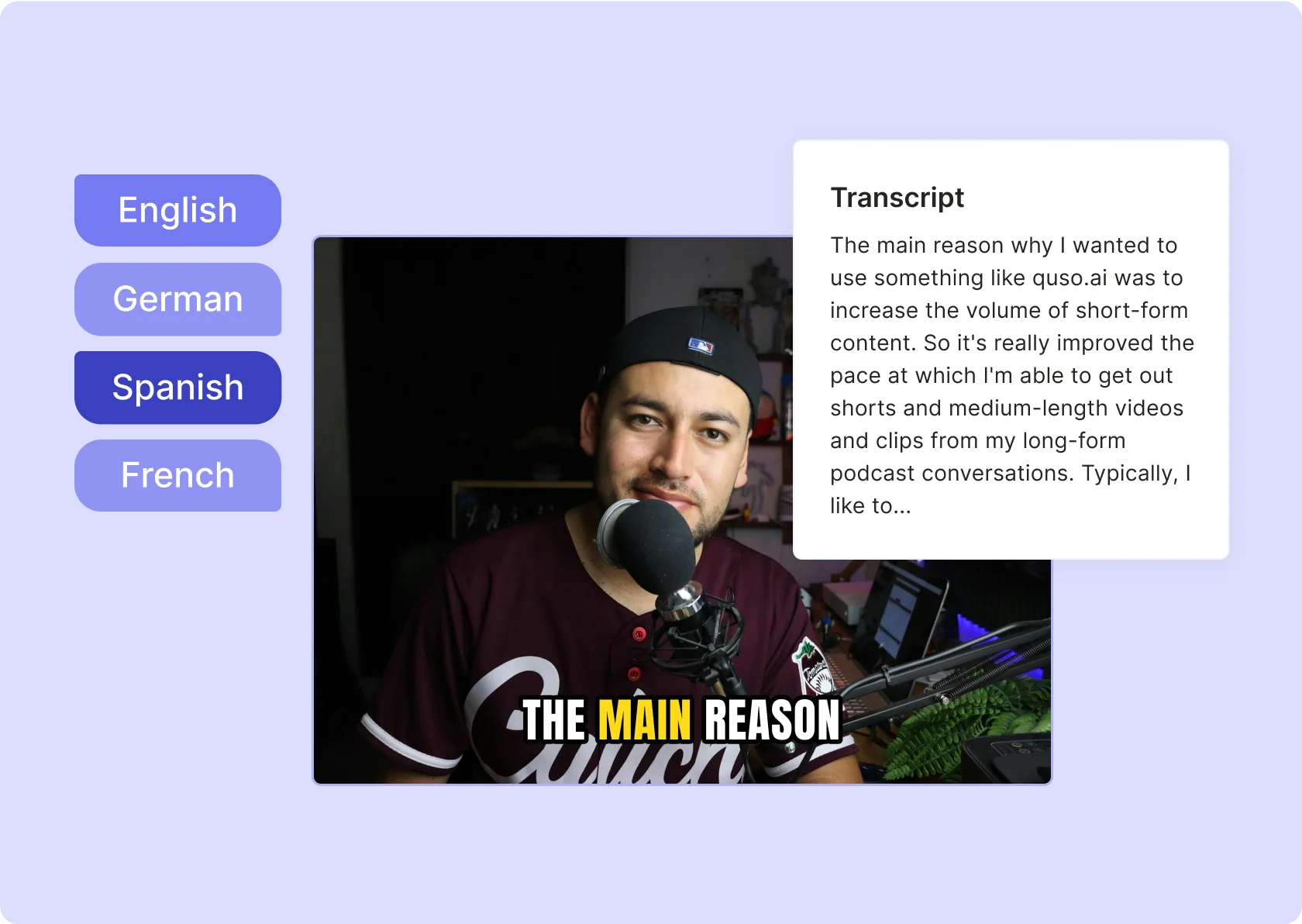
The transcript is editable word by word. Fix a misheard name or a Scripture reference in place before you copy the text or cut captions from that passage. Nobody at quso.ai reads or edits the transcript; the review is yours.
The same transcript feeds captions and clips
Select a passage of the transcript to cut a captioned clip from it. The transcript becomes the starting point for social posts as well as a text record of the message, without a second upload.
What sermon transcription in quso.ai includes, and what it leaves out
Copy on any plan, SRT on paid plans
General speech recognition, no church vocabulary
Import from where the church already keeps recordings
How to transcribe a sermon with quso.ai
- Sign up and import the recording. Paste a link (YouTube, Vimeo, Google Drive, Dropbox, Zoom, and others) or upload an audio or video file from your computer, Google Drive, or Box.
- Wait for processing. It usually takes a few minutes, longer for a long recording. Each minute uses about one credit; the free plan includes 75 a month.
- Open the review screen. The transcript sits next to the candidate clips. Read it for names, Scripture references, and passages where the words came through wrong, and check where each proposed clip starts and ends.
- Correct the text. Edit the transcript word by word. If you also want video, select a passage to make a custom clip and choose a caption style.
- Use the transcript. Copy it to the clipboard on any plan for a bulletin, sermon notes, or the church website. On paid plans, download SRT captions from the desktop editor for YouTube or an accessibility file. There is no TXT or DOCX export, so paste the copied text into your own document. Clips, if you made any, export as MP4 or go to the scheduler.
A worked example: transcribing a 45-minute Sunday sermon
A church admin uploads Sunday's 45-minute sermon from Google Drive on Monday morning. Processing uses about 45 credits and finishes within a few minutes. The review screen opens with the word-level transcript on one side and candidate clips on the other.
The admin reads the transcript top to bottom. The pastor's surname is misheard twice and corrected in place. A reference to Philippians 4 came through as "Philippians for," which is the kind of error the software will not catch on its own. A quoted hymn line over the piano is garbled and gets retyped from memory. Once the text is clean, the admin copies it into the sermon-notes page on the church website and pastes it into the Thursday bulletin draft.
Because the transcript is already there, the admin selects the two-minute passage on the Philippians text and makes a custom clip with captions for the church's Facebook page; the same passages would be the starting point in the sermon clips generator. On the free plan the clip renders at 720p with a watermark and the SRT download is unavailable; the church later moves to a paid plan for the SRT file it needs for YouTube captions. Nothing was published that a person had not read first.
This is an example, not a guarantee. A recording with the worship band still playing under the opening prayer will need more correction, and a guest speaker with an unfamiliar name will need a find-and-replace pass. How the transcript fits into a weekly posting routine is covered on the church social media page and in the church social media strategy checklist.
Frequently Asked Questions
Is quso.ai a sermon transcription service?+
How accurate is the transcript?+
What formats can I get the transcript in?+
How long does it take, and what does it cost?+
Can I upload any sermon recording?+
Sermon Transcription Software: an editable transcript from the sermon recording
Start free, no card requiredA worked example: transcribing a 45-minute Sunday sermon
A church admin uploads Sunday's 45-minute sermon from Google Drive on Monday morning. Processing uses about 45 credits and finishes within a few minutes. The review screen opens with the word-level transcript on one side and candidate clips on the other.
The admin reads the transcript top to bottom. The pastor's surname is misheard twice and corrected in place. A reference to Philippians 4 came through as "Philippians for," which is the kind of error the software will not catch on its own. A quoted hymn line over the piano is garbled and gets retyped from memory. Once the text is clean, the admin copies it into the sermon-notes page on the church website and pastes it into the Thursday bulletin draft.
Because the transcript is already there, the admin selects the two-minute passage on the Philippians text and makes a custom clip with captions for the church's Facebook page; the same passages would be the starting point in the sermon clips generator. On the free plan the clip renders at 720p with a watermark and the SRT download is unavailable; the church later moves to a paid plan for the SRT file it needs for YouTube captions. Nothing was published that a person had not read first.
This is an example, not a guarantee. A recording with the worship band still playing under the opening prayer will need more correction, and a guest speaker with an unfamiliar name will need a find-and-replace pass. How the transcript fits into a weekly posting routine is covered on the church social media page and in the church social media strategy checklist.
Want the full workflow? This free tool is part of quso.ai's AI Content Repurposing: clip, edit, caption, and schedule in one place.


quso.ai Research
The Short Form Video Performance Report
We measured 508,000 posts from 1,900 creators across 80 countries to separate what actually changes reach from what only sounds like it does.