What is Targeting?
Targeting in digital marketing refers to the strategic process of identifying and engaging specific groups of users with tailored ads or content based on criteria such as demographics, interests, beha
More About Targeting
Targeting is a fundamental strategy in digital marketing that involves dividing a broad audience into more manageable segments. These segments are created based on shared characteristics that are relevant to the marketing objectives. For example, if you're launching a new fitness app, you might target users who are interested in fitness, health, and wellness, within a specific age range, and who reside in urban areas.
Here’s how you can effectively implement targeting using the following criteria:
- Demographics: Age, gender, income, education, and occupation.
- Geographics: Location, such as country, state, city, or neighborhood.
- Psychographics: Interests, activities, opinions, and values.
- Behavioral: Online behavior, purchase history, and engagement with previous ads.
- Technographics: Device usage, operating systems, and browser preferences.
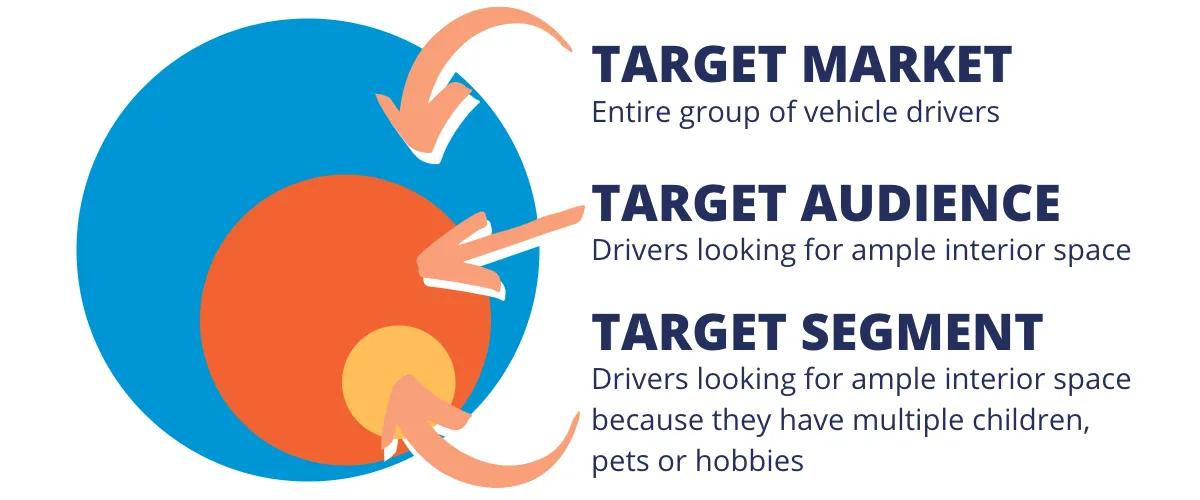
Here’s an example of targeting in action: This image shows how marketers can focus on specific segments of their target audience, such as families looking for spacious interior vehicles or those interested in particular features.
Did you know? Targeted campaigns often yield higher return on investment (ROI) because they focus on audiences who are more likely to be interested in the product or service.
Let's look at some Real-Life examples:
- E-commerce Retailer: Suppose an online clothing retailer wants to promote a new line of winter coats. They can target users in colder climates who have previously purchased winter apparel. By doing so, they ensure that their ads reach people who are more likely to need and buy winter coats.
- Fitness App: A fitness app can target users who follow fitness influencers and engage with health-related content on social media platforms. By incorporating influencer marketing, the app can further increase the likelihood that the ad will resonate with the audience and lead to downloads.
- Local Restaurant: A local restaurant can use geographic targeting to show ads to people within a certain radius of their location. They can further narrow down the audience by targeting users who have expressed interest in dining out or follow food bloggers.
Let’s look at how including relevant images and infographics can make content more engaging and easier to understand. For example:
- Demographic Targeting: An infographic showing different demographic attributes like age, gender, and income.
- Behavioral Targeting: A flowchart depicting the journey of a user from initial engagement to conversion based on their online behavior.
- Geographic Targeting: A map highlighting different regions and the specific audiences targeted in those areas.
By providing a comprehensive understanding of targeting, along with practical examples and visual aids, you will be better equipped to implement effective targeting strategies in your digital marketing campaigns.