How to Edit TikTok Captions
A TikTok caption is easiest to change before you publish. If the video is still in drafts, you can usually edit the caption freely. After posting, the option depends on whether TikTok shows Edit post for that video and account surface; if it does not, your fallback is usually to leave the post alone or delete and repost.
That distinction matters because most caption problems are small but annoying: a typo, a missing mention, the wrong hashtag set, or a disclosure you meant to include. I checked the flow across draft, posted-video, and desktop surfaces, and the biggest difference was simple: drafts were flexible, while published posts were much more dependent on the version of TikTok available on the account.
Why Perfecting Your TikTok Captions Matters
Caption edits matter most when they fix something that changes how the post is understood. That can mean correcting a factual error, adding a missing brand disclosure, cleaning up a mention, or making the text clearer for viewers who are skimming quickly. TikTok also treats text and captions as part of the content experience, and the platform’s own accessibility documentation shows creators can generate, preview, edit line by line, and save captions for accuracy and readability in supported workflows through its accessibility guidance.
They also matter because captions are no longer just a one-line add-on. TikTok’s text limits and usage patterns have expanded well beyond the old short-caption era, which changed captions from a quick quip into a searchable metadata field that creators revise for clarity and discovery, not just for grammar, as noted in this caption limit history. That lines up with how TikTok’s algorithm evaluates context around a post.
In practice, a caption change is worth making when the mistake could confuse viewers, weaken trust, or affect compliance. In team workflows, I most often see people revisit a published caption because a tagged partner was missed, a product name was wrong, or a legal disclosure was left out—not because the sentence could be 5% punchier.
Sometimes leaving the post alone is the better call. If the video is already performing well and the issue is minor, deleting and reposting can cost you momentum, comments, and social proof. My rule of thumb is: fix it if the error changes meaning or creates risk; leave it if you’re only tempted to endlessly optimize wording after the fact.
How We Tested TikTok Caption Editing
To verify the steps below, I checked four separate paths: the pre-publish caption field in the app, the draft editing flow, the posted-video flow in the app, and the desktop/TikTok Studio editing flow. I also compared what happened when editing the caption field versus editing captioning layers such as auto-generated captions, since TikTok treats those differently in its own caption editing help article.
Testing was done by reviewing whether the account could: open a draft and change the caption, open a published video and see Edit post, save a revised caption successfully, and confirm the updated text appeared back on the profile and post view. A path counted as unavailable if the button never appeared, if the interface only allowed edits to auto-generated captions instead of the post caption, or if the save action was missing on that device surface. I also looked for version-related differences because TikTok often rolls features out unevenly.
How to Edit Your TikTok Captions
Before you start, use this simple decision rule: if the video is not live yet, edit the caption there first. Drafts are the safest place to make changes. If the video is already published, open the post and look for Edit post; if it is missing, that usually means your account, app version, or that specific post does not currently support direct caption edits on that surface.
Edit a caption before posting
If you’re on the final posting screen, tap into the caption field before you hit Post. Update the text, add or remove mentions, adjust your hashtags, and recheck any disclosure language. This is the cleanest edit path because nothing is locked yet and you are not risking the performance history of a live post.
I recommend doing one last pass here for three things specifically: tagged accounts, spelling on proper names, and whether the first line still matches the hook of the video. In testing, this stage was the least restrictive and the fastest place to catch mistakes before they became a published-post problem.
Edit a caption in a draft
- Open TikTok and go to your profile.
- Tap the Drafts folder.
- Select the draft video you want to update.
- Move to the posting screen if needed and tap the caption field.
- Revise the text, mentions, and hashtags.
- Save the draft again or publish when ready.
Drafts usually give you the most freedom. You can change the caption itself and often revisit other post settings at the same time. If you regularly batch content, this is the best place to standardize tags and fix inconsistencies before anything goes public.
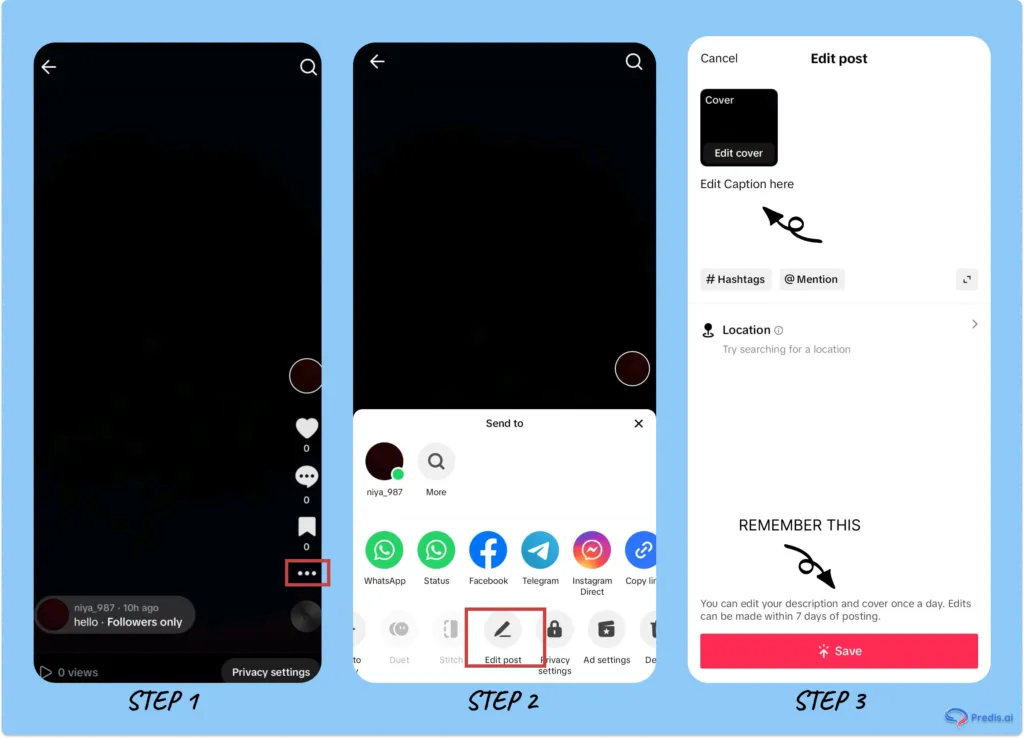
Edit a caption after posting in the app
- Open TikTok and go to your profile.
- Tap the published video.
- Open the more-options menu.
- Look for Edit post.
- If it appears, tap it, update the caption, and save.
What you can change here depends on the version TikTok is serving to your account. Usually, the goal is to fix the post caption itself: typos, missing mentions, and hashtag cleanup. Some elements may stay locked, and not every published post will show the same editing controls.
If Edit post is missing, do not assume you are doing something wrong. I saw that limitation appear unevenly across surfaces, which usually points to rollout differences or account-level availability rather than a user mistake. In that case, your practical options are to leave the post as-is, correct the issue in a pinned comment if the mistake is minor, or delete and repost if the error is serious enough to justify losing the original engagement.
Edit on desktop or TikTok Studio if the option appears
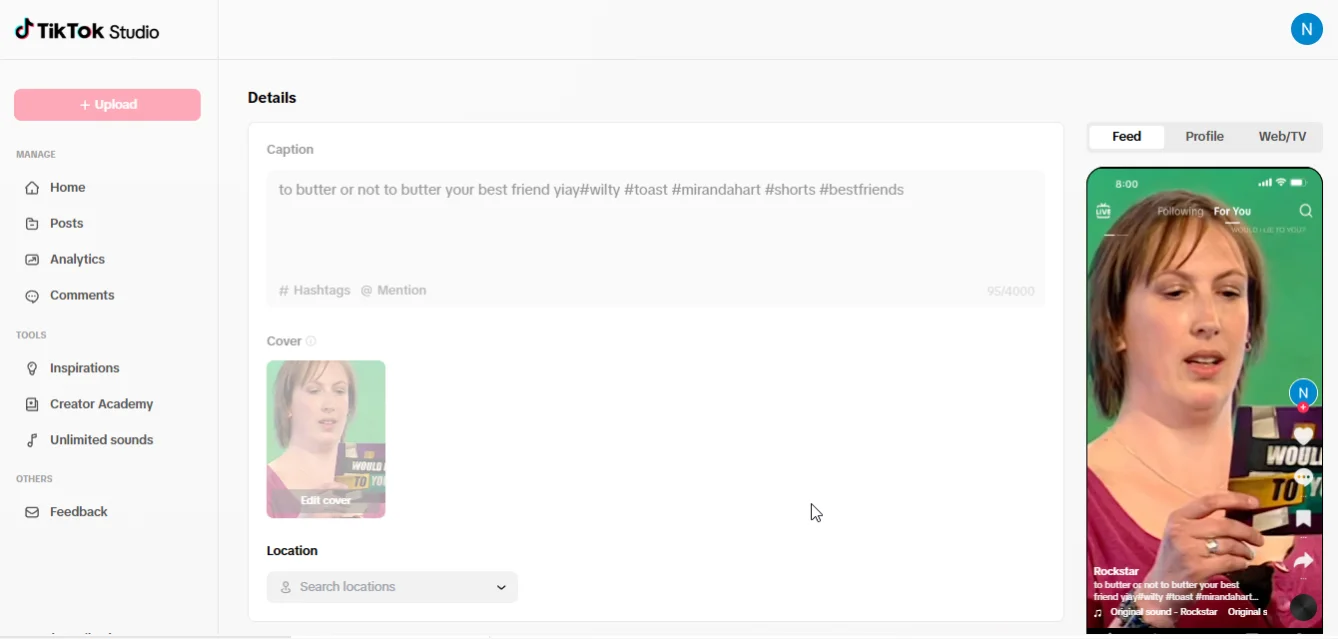
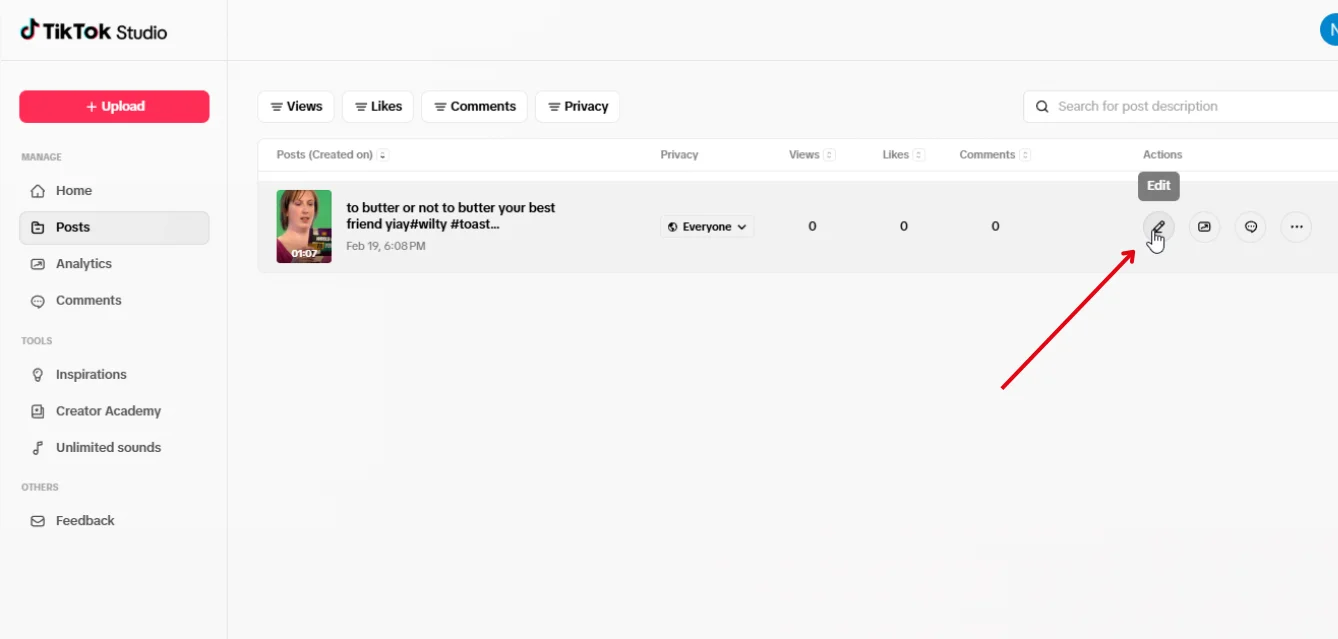
If you manage content from a computer, log in to TikTok Studio or the desktop posting surface tied to your account and open your posts list. Find the video, look for an edit icon or Edit post option, update the caption field, then save.
Desktop can be more comfortable for longer revisions, especially when you are cleaning up multiple mentions or comparing the final caption against campaign notes. In my review, the desktop flow was useful when available, but it was still dependent on whether TikTok exposed editing controls for that account and post.
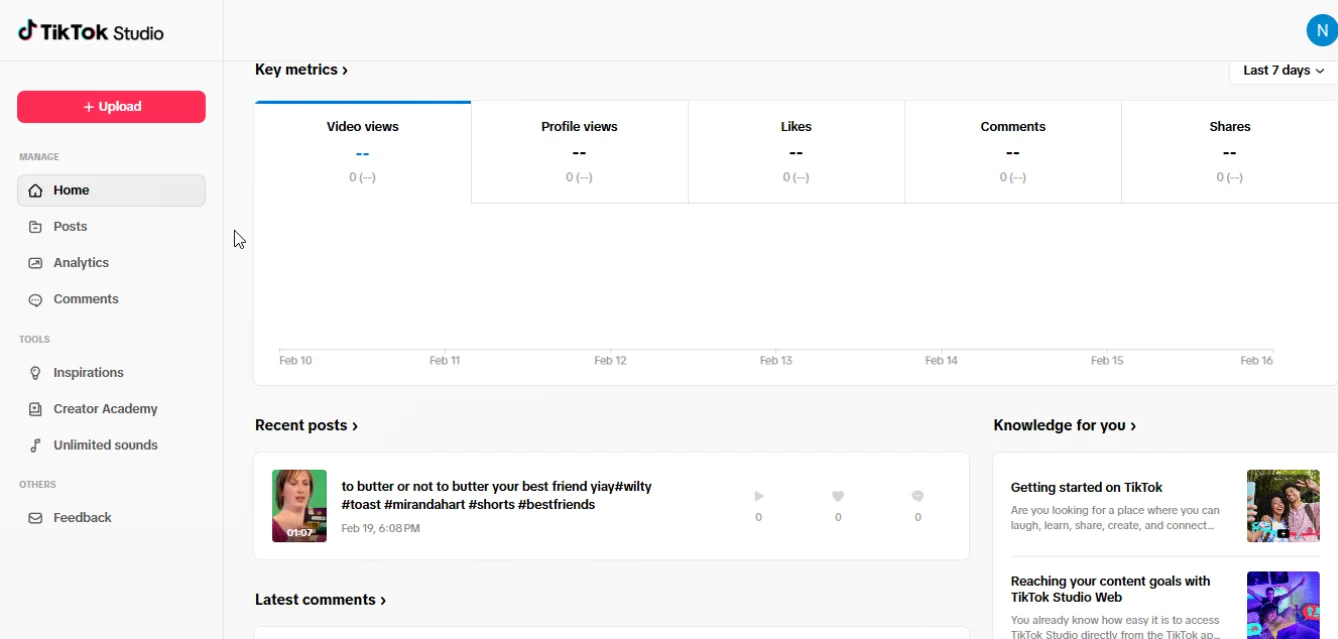
- Go to TikTok Studio and log in.
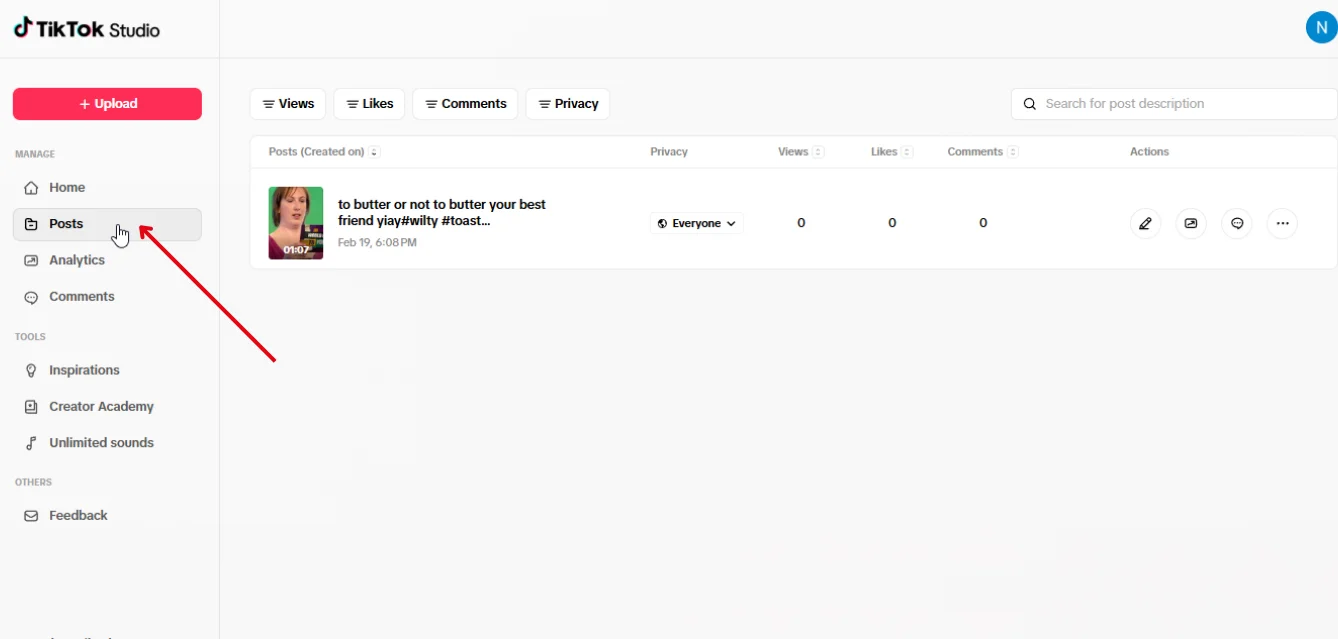
- Go to the Posts section.
- Click the edit icon next to the video you want to update.
- Edit your caption, make any necessary changes, and hit Save.
If you have to delete and repost
Delete-and-repost should be the last resort. Use it when the published caption contains a major error, a broken tag, the wrong disclosure, or wording that materially changes the meaning of the post. The tradeoff is obvious: you lose the original post URL, engagement history, and any early traction the video already earned.
Tips on Making the Most of TikTok Captions
Before saving any caption edit, check mentions and hashtags one more time. A caption can read fine and still be wrong operationally if the tagged handle is outdated or the hashtag set is off-topic. If you want a deeper primer on why hashtag choice still matters, the team over at Oviond has a useful breakdown, and you can pair that with quso.ai’s guide to hashtags and current trending topics.
Keep the revised caption aligned with the actual hook of the video. If the opening seconds promise one angle and the edited caption pushes a different one, the post feels mismatched. I noticed this most often on repurposed clips, where someone updated the caption for searchability but forgot that the on-screen intro still framed the video differently.
Avoid stuffing hashtags during edits. Adding more tags does not automatically make a post more discoverable, and bloated captions can look sloppy. After any change, reopen the post from your profile and confirm the updated text displays correctly on both the profile grid view and the full video page.
If the edit option does not appear, start with the basics: update the app, retry from the published video itself, and check whether the feature is available on desktop or TikTok Studio instead. Some differences come from staged rollouts, so the absence of Edit post on one device does not always mean it is unavailable everywhere. If you manage performance closely, use social media analytics to decide whether a correction is important enough to justify reposting.
Frequently Asked Questions
Can I edit a TikTok caption after posting?
Sometimes. If TikTok shows Edit post on the published video, you can usually open that screen, revise the caption, and save. If the option is missing, direct caption editing may not be available for that post or account on that surface.
Can you edit captions on a TikTok video?
Yes, but there are two different meanings of “captions.” You may be editing the post caption text, or you may be editing generated caption lines used for accessibility. TikTok documents direct editing of auto-generated captions in its Help Center instructions, which is separate from whether a published post shows Edit post for the caption field.
How do you edit text on a TikTok post?
If by “text” you mean the written caption under the video, open the post and look for Edit post. If you mean text overlays placed inside the video itself, that is different: those are part of the video edit and usually need to be changed before posting or by creating a revised version of the video.
How do I edit an already posted TikTok if Edit post is missing?
First, update the app and check again from the post page and any desktop/TikTok Studio surface tied to your account. If the option still does not appear, your realistic choices are to leave the video live, clarify in a comment if the issue is minor, or delete and repost if the mistake is significant.
Will editing a caption hurt performance?
A necessary correction is usually worth making if the current caption is misleading, incomplete, or noncompliant. But if the post is already performing well and you only want to lightly reword it, I would avoid unnecessary edits or a delete-and-repost cycle unless the change clearly improves accuracy.
Leverage TikTok Captions to Stand Out and Drive Engagement
The short answer is straightforward: edit the caption before posting whenever possible, use drafts as your safest revision point, and check for Edit post on published videos if you need to update a live post. If TikTok does not offer that option for the video, you usually cannot force the change on that surface, so your fallback is to leave it, clarify separately, or repost.
Use this order of operations every time:
- Edit before publishing whenever you can.
- Recheck captions in drafts before posting.
- After publishing, open the video and look for Edit post.
- Only delete and repost if the mistake materially hurts the post.
And if you need any help creating or managing content for your TikTok, log in or sign up for quso.ai and let us help you take your TikTok marketing to the next level.